Ever wondered why some LinkedIn posts attract thousands of impressions while others seem invisible? If you have, you are not alone. In today’s digital landscape, understanding what is a linkedin impression has become essential for anyone looking to grow their presence on the platform.
This guide will break down the mystery. You will discover what impressions are, how they are measured, and why they matter in 2025. We will explore how impressions fuel personal and business branding, reveal the factors that influence your numbers, and share proven strategies to boost your visibility.
Ready to unlock the secrets behind LinkedIn success? Let’s dive in.
What Is a LinkedIn Impression?
Ever scrolled through your LinkedIn feed and wondered, “What is a linkedin impression and why does it matter?” Understanding this metric is key to decoding your post performance and unlocking new opportunities for growth.
Definition and Core Concept
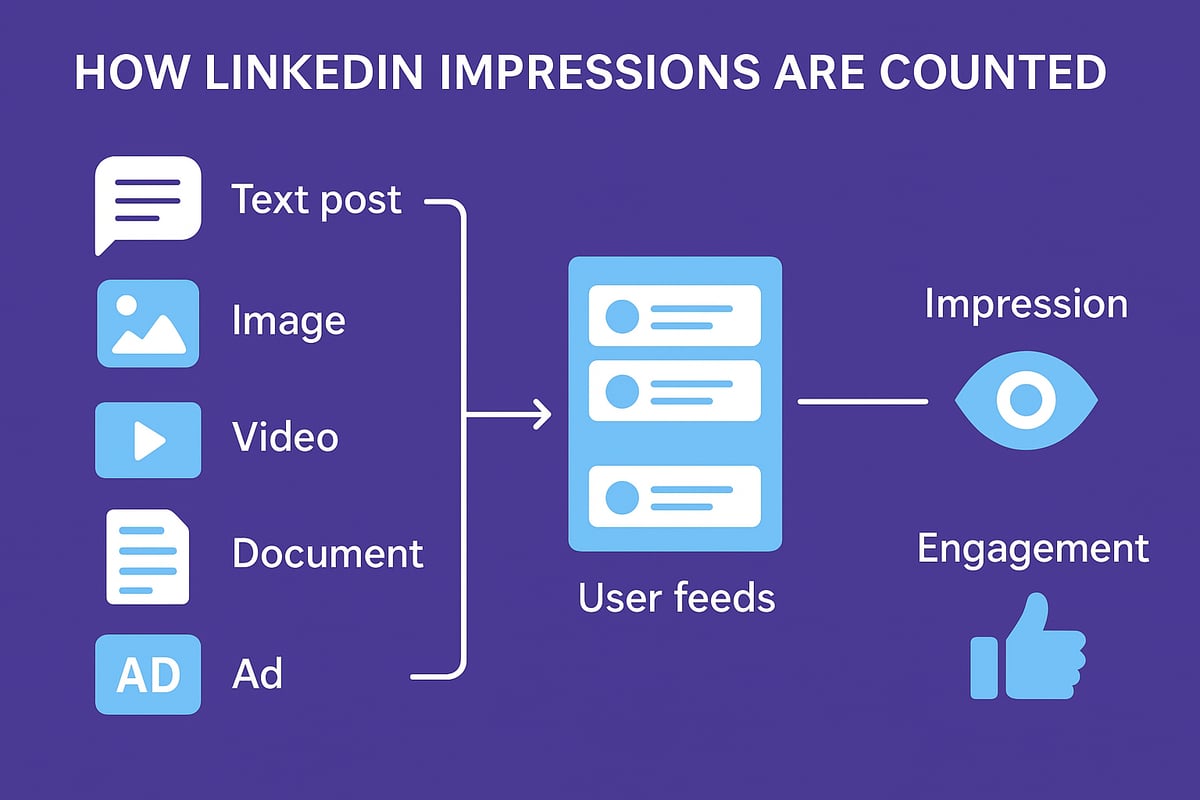
A LinkedIn impression is recorded each time your post, article, or ad appears in someone’s feed or on their screen for at least 300 milliseconds. If a user scrolls past your content—even without interacting—LinkedIn registers this as an impression.
When asking what is a linkedin impression, remember: it’s not about clicks or likes. It’s about visibility. Impressions show the total number of times your content was displayed, regardless of the user’s action.
Impressions vs. Views vs. Engagement
Many confuse impressions with views or engagement. Here’s a clear comparison:
| Metric | What It Means |
|---|---|
| Impression | Content appeared in someone’s feed or screen |
| View | User actively opened or watched your content |
| Engagement | User interacted (liked, commented, clicked, shared) |
So, what is a linkedin impression compared to a view? An impression is passive visibility. A view indicates active consumption. Engagement means the user performed an action.
How LinkedIn Counts Impressions
LinkedIn’s algorithm counts an impression the moment your content loads in a user’s feed, even if they don’t interact. For example, if your post is displayed to 10,000 people but only 50 like it, your impression count is 10,000—showing reach, not just popularity.
Impressions are unique per post per user session. If the same user sees your post twice in one session, it typically counts as one impression. However, in different sessions, it may count again.
Types of Content That Generate Impressions
You generate impressions on LinkedIn with several content formats:
- Text posts
- Images and infographics
- Videos
- Documents and PDFs
- Polls
- Sponsored ads
With over 2 billion feed updates viewed each week, according to LinkedIn's User Growth and Engagement Statistics 2025, every content type contributes to your impression metrics. So, what is a linkedin impression for a video or ad? The principle is the same: as soon as it appears in a feed, it counts.
Impressions vs. Reach: Common Misconceptions
A frequent misconception is that impressions and reach are identical. In reality, reach counts the number of unique users who saw your content, while impressions total every instance your content was displayed (including repeats).
If one user sees your post three times, that’s three impressions but only one reach. Understanding what is a linkedin impression helps you set realistic expectations for your content’s exposure.
Why Impressions Matter for LinkedIn Analytics
Impressions form the foundation of LinkedIn analytics. They reveal how often your message is placed in front of your audience, acting as the first step in the marketing funnel. Without impressions, engagement can’t happen.
When you ask what is a linkedin impression, you’re really asking how visible your content is. High impression numbers mean your content is being distributed widely, giving you more chances for engagement, brand growth, and business results.
Why LinkedIn Impressions Matter in 2025
In 2025, understanding what is a linkedin impression has never been more critical for professionals and businesses alike. As LinkedIn continues to evolve, impressions are now at the very core of how visibility, reach, and influence are measured on the platform.
Impressions are more than just a vanity number. They directly reflect how often your content is displayed in someone’s feed, even if they do not click or interact. This metric is the first sign that your message is making its way to a larger audience, whether you are a job seeker, recruiter, business owner, or thought leader.
For personal brands, what is a linkedin impression means knowing your expertise is seen by the right people. Companies rely on impressions to gauge brand awareness and authority. Creators use impression data to refine what content resonates best. In all cases, higher impressions mean greater chances that your message will spark connections and opportunities.
The LinkedIn algorithm plays a powerful role here. It analyzes which posts generate more impressions and then decides which content to show to wider audiences. This distribution is not random. If your posts consistently earn high impressions, the algorithm interprets your content as valuable and relevant, extending its reach even further.
In 2025, this process becomes even more strategic. According to LinkedIn's Algorithm Update – March 2025, recent changes now prioritize content that demonstrates both relevance and engagement potential. This means your ability to generate impressions is closely linked to how well you understand and serve your audience’s interests.
Impressions are also a leading indicator of content resonance. If you are wondering what is a linkedin impression in terms of business impact, think of it as the top of your funnel. More impressions mean more eyes on your posts, which in turn increases the likelihood of meaningful actions such as clicks, comments, shares, or direct messages.
Here are some key ways impressions drive value in 2025:
- Lead Generation: B2B companies use high-impression posts to nurture leads and attract new clients.
- Recruitment: Recruiters rely on impressions to showcase employer branding and attract top talent.
- Business Development: Increased impressions help companies stay top-of-mind with prospects and partners.
The competitive landscape is also shifting. LinkedIn’s user base is projected to exceed 1 billion in 2025, making the battle for attention fiercer than ever. With more content creators and brands vying for visibility, understanding what is a linkedin impression and optimizing for it is now essential.
Table: How Impressions Impact Business Goals
| Objective | Role of Impressions | Example Outcome |
|---|---|---|
| Brand Awareness | Broad exposure to target audience | More profile visits |
| Lead Generation | Top-funnel visibility for content offers | Increased inbound inquiries |
| Recruitment | Showcasing company culture, open roles | More qualified applicants |
| Thought Leadership | Amplify expertise to relevant networks | Speaking invitations |
Ultimately, high impressions are the foundation for all further engagement and conversions on LinkedIn. They are your first checkpoint in the race for influence. If you want to grow your brand, generate leads, or drive business results, mastering what is a linkedin impression must be at the top of your 2025 LinkedIn strategy.

How LinkedIn Tracks and Counts Impressions
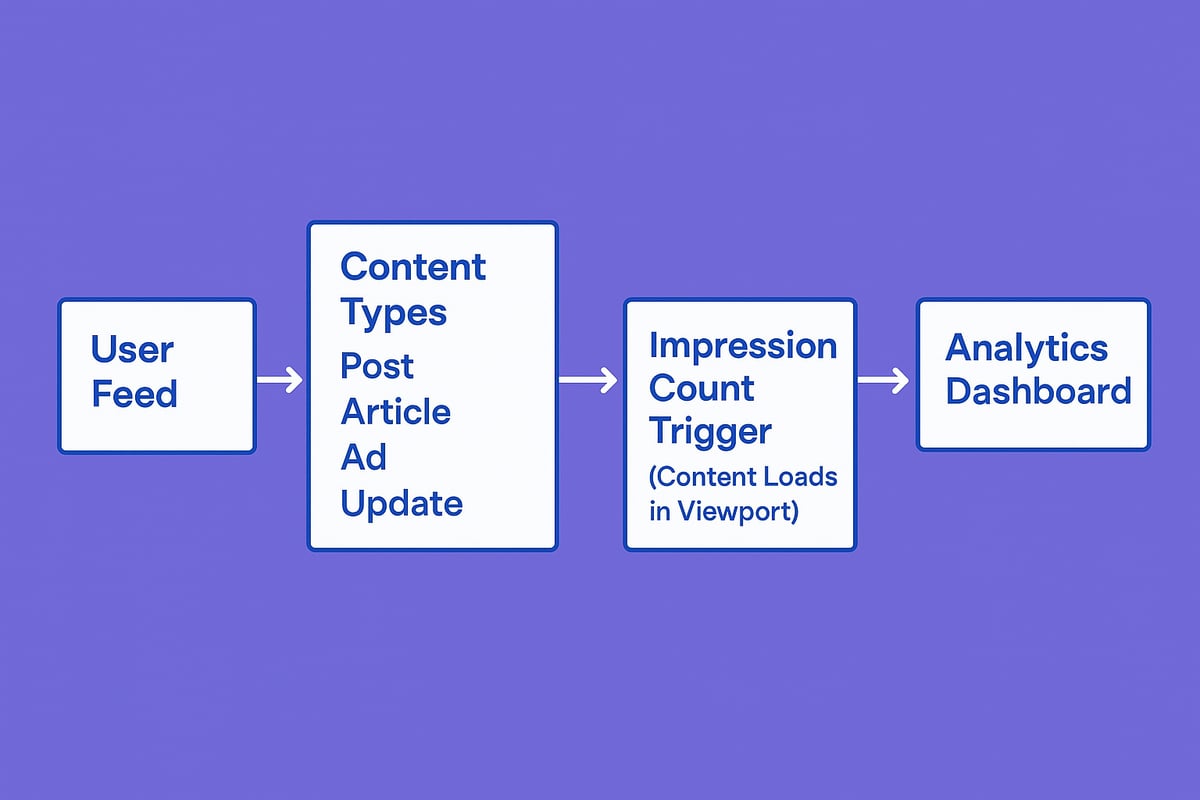
Understanding what is a linkedin impression means exploring the technical side of how LinkedIn measures content visibility. Every time your post, article, or ad appears on someone’s feed, LinkedIn’s system counts it as an impression. But the process is more nuanced than it seems.
Technical Breakdown
LinkedIn uses a sophisticated algorithm to determine what is a linkedin impression across various content types. For posts, an impression is recorded once your content loads in a user’s feed, even if they do not interact with it. This approach applies to articles, company updates, and ads as well.
The system sets time thresholds to ensure quality. If a user scrolls past your post instantly, it may not count as a valid impression. LinkedIn’s servers register an impression only when content is visible in the viewport for a brief moment.
Device matters, too. On mobile, LinkedIn’s app tracks impressions using slightly different parameters than desktop browsers, adjusting for screen size and scrolling speed. The goal is consistent measurement regardless of how users access content.
To maintain data integrity, LinkedIn actively filters out bot traffic, automated views, and duplicate impressions. For example, if a user sees your post twice in one session, each instance is counted as a separate impression, but repeated rapid views may be filtered out.
Here’s a quick comparison:
| Content Type | Impression Trigger | Duplicate Policy |
|---|---|---|
| Post/Article | Loaded in feed | Each view per session |
| Ad/Sponsored | Loaded + viewability minimum | Each unique load |
| Company Update | Loaded in company feed | Each unique follower |
According to Socialinsider (2024), company page posts average a 5.3% impression rate per follower, while personal profiles often see higher rates due to network effects.
Sponsored content and ads are tracked with even stricter protocols. For paid campaigns, impressions are measured only when ads meet viewability standards, ensuring advertisers get reliable data.
Privacy settings and audience segmentation can affect how impressions are counted. If your post is visible only to select connections, only those eligible users’ views will generate impressions.
If you want to dive deeper into leveraging these metrics for your business, check out this LinkedIn marketing solutions for small businesses resource for actionable strategies.
LinkedIn Analytics: Accessing and Interpreting Impression Data
Once you grasp what is a linkedin impression technically, the next step is analyzing your results. LinkedIn offers robust analytics dashboards for both personal profiles and company pages, making data accessible and actionable.
To access your stats, navigate to the analytics section on your profile or business page. Here, you’ll see key metrics related to impressions, such as unique viewers, engagement rate, and click-through rate. These numbers provide crucial context for understanding what is a linkedin impression in action.
For example, tracking impression trends over time can reveal which types of content resonate most with your audience. If a post spikes in impressions but lags in engagement, you may need to adjust your messaging or format.
LinkedIn’s analytics tools offer data visualization, including graphs, heatmaps, and export options. This makes it easy to spot patterns and benchmark your performance against industry standards.
A best practice is to set regular benchmarks. Compare your impression rates with similar profiles or companies. Are you above or below average? Use this insight to refine your strategy and boost your numbers.
Here’s a checklist to help you make the most of your analytics:
- Review impression counts weekly
- Analyze engagement rate alongside impressions
- Export data for deeper analysis
By consistently monitoring and interpreting your impression data, you can turn raw numbers into actionable insights. This empowers you to optimize your content, expand your reach, and achieve your LinkedIn goals.
Factors That Influence LinkedIn Impressions
Understanding what is a linkedin impression is just the beginning. To maximize your visibility and impact, you need to know which factors drive your impression numbers up or down. Let’s break down the key elements that shape your LinkedIn reach.

Content and Posting Strategies
The content you post—and how you post it—greatly impacts what is a linkedin impression and how many you receive. Timing is critical. Data consistently shows that posting on Tuesday, Wednesday, or Thursday mornings yields the highest impressions. Your audience is more likely to see your content when they are most active.
Content format also plays a major role. Posts with images can double your impressions compared to text-only updates. Videos, carousels, and documents often outperform standard posts, while polls are excellent for sparking engagement that increases impressions. Here’s a quick comparison:
| Format | Avg. Impression Boost |
|---|---|
| Image | 2x |
| Video | 3x |
| Carousel | 2.5x |
| Poll | 2x |
Hashtag and keyword optimization make a significant difference in discoverability. Use three to five relevant hashtags per post. Inserting trending or industry-specific hashtags helps your content surface in targeted feeds, directly affecting what is a linkedin impression for your posts.
Engagement triggers are another powerful lever. The more people interact—through likes, comments, or shares—the wider your content spreads, multiplying impressions via network effects. Tagging relevant people and companies increases visibility, as their networks can now see your post. Consistency matters too. Posting regularly signals to the LinkedIn algorithm that you are an active contributor, which can improve your impression count over time.
For more actionable ways to boost impressions, check out these LinkedIn hacks using filters to refine your content strategy and maximize reach.
Audience and Network Effects
Your network is the engine behind what is a linkedin impression. The size and relevance of your connections directly affect how many people see your content. A larger, more engaged network increases the odds that your post appears in more feeds.
But it’s not just about numbers. The quality and relevance of your audience matter just as much. If your network is filled with professionals interested in your niche, your content is more likely to resonate and spread. Niche content strategies often yield higher impression rates within targeted industries compared to broad, general business advice.
LinkedIn groups and communities offer another avenue to amplify impressions. Sharing your content in active groups relevant to your field can expose your posts to thousands of extra eyes. Participation in discussions also boosts your profile’s visibility, further increasing what is a linkedin impression for your posts.
Consider the impact of network effects: a single share from an influential connection can exponentially increase your reach. Consistently engaging with others’ content, responding to comments, and joining trending conversations are all proven ways to grow your impression count.
Ultimately, understanding what is a linkedin impression and mastering these influencing factors will help you unlock the platform’s full visibility potential.
How to Increase Your LinkedIn Impressions: Step-by-Step Guide
Want to know how to boost your LinkedIn presence and make your content stand out? Mastering what is a linkedin impression is only the beginning. Use this actionable, step-by-step guide to turn impressions into real results, whether you are building a personal brand, promoting your business, or expanding your reach.
Step 1: Optimize Your Profile and Company Page
Start by ensuring your LinkedIn profile and company page are complete and professional. Fill out every section, add a keyword-rich summary, and use a high-quality headshot. Profiles with professional photos get 14x more views.
Include industry-relevant keywords naturally to help LinkedIn’s algorithm understand who you are. Banner images and company branding should be clear and visually appealing. The more optimized your profile, the more likely you are to benefit from what is a linkedin impression, as your content gets prioritized in feeds.
Step 2: Create High-Quality, Relevant Content
To increase what is a linkedin impression, focus on content that addresses your audience’s pain points. Share actionable tips, case studies, and thought leadership insights. Posts that tell stories or present real-life examples are more likely to be shared.
Mix up your formats: try videos, images, documents, and polls to see what resonates. Case study posts can generate up to 3x higher engagement, which in turn boosts your impression count. Value-driven content is key to earning more attention.
Step 3: Use Strategic Posting Schedules
Timing matters. Analyze your audience’s activity using LinkedIn analytics and experiment with different days and times. Typically, Tuesday to Thursday mornings see the highest engagement, leading to more of what is a linkedin impression.
Create a content calendar to maintain consistency. Posting too little can cause you to be forgotten, while posting too often can overwhelm your network. Find the right balance by tracking performance and adjusting your schedule for optimal results.
Step 4: Leverage Hashtags, Mentions, and Engagement Tactics
Hashtags and mentions help expand your reach beyond your immediate network. Use 3–5 relevant hashtags per post to target the right audience. Tagging people and companies encourages them to interact, which amplifies what is a linkedin impression through network effects.
Prompt engagement by asking questions, running polls, or sparking discussions. Posts with images receive double the impressions compared to text-only posts, so add visuals whenever possible. These tactics help your content travel further across LinkedIn.
Step 5: Engage Actively with Your Network
Engagement is a two-way street. Respond to comments on your posts quickly, and participate in conversations on others’ content. Users who engage with their network often see 2x more impressions on their own posts.
Joining industry groups and responding to trending topics increases your visibility. For more ideas on boosting engagement, check out these proven tips for increasing your LinkedIn response rate. Remember, the more active you are, the more likely you are to benefit from what is a linkedin impression.
Step 6: Monitor, Analyze, and Adjust
Regularly review your LinkedIn analytics to track impression trends over time. Analyze which types of posts generate the most what is a linkedin impression, and use this data to refine your strategy.
Try A/B testing different formats, topics, and posting times. Benchmark your results against industry standards to spot growth opportunities. Adapting based on data ensures you are always improving and staying ahead of LinkedIn’s evolving algorithm.
Common LinkedIn Impression Myths and FAQs
Ever found yourself confused by what is a linkedin impression and what it really means for your LinkedIn strategy? You are not alone. Myths about impressions often cloud how users interpret their analytics, leading to missed opportunities or misguided efforts. Let us clear the air by addressing common misconceptions and providing straightforward answers to the most frequently asked questions.
Debunking Misconceptions
There are several persistent myths about what is a linkedin impression. Let us address the most common ones with clear facts:
Myth: More impressions always mean more engagement.
In reality, impressions show how often your content appears in feeds, not how many people interact with it. You might have a post with 10,000 impressions but only 50 likes. Engagement depends on content quality and relevance, not just visibility.Myth: Impressions are the same as views or clicks.
Impressions count whenever your post is displayed in someone’s feed, even if they do not stop to view or click. Views usually require more user interaction, such as watching a video or reading an article.Myth: Paid ads are the only way to boost impressions.
Organic strategies, like optimizing your posting time and using relevant hashtags, can also increase your impression count. Personalization tactics, as outlined in Power of personalization in social media marketing, are effective for driving both engagement and impressions on LinkedIn.Myth: Deleting and reposting content resets impressions.
LinkedIn’s algorithm tracks new content separately. However, reposting frequently can actually reduce reach due to audience fatigue.
For example, a post with low impressions but a high engagement rate can outperform a widely seen post that fails to capture attention. This distinction is essential for understanding what is a linkedin impression and leveraging it for real results.
Frequently Asked Questions
How long do impressions last on LinkedIn posts?
Impressions accumulate as long as your post is active and visible in feeds. Most impressions occur within the first 48 hours, but posts can gain impressions for weeks.
Can you track who saw your content?
LinkedIn does not reveal the identities of everyone who sees your content. You can view aggregated data, such as industries or locations, but not specific names.
Do profile views count as impressions?
No, profile views are tracked separately from post impressions. Impressions only refer to content displayed in the feed or on your profile’s activity tab.
How do LinkedIn algorithm updates affect impressions?
Algorithm changes can impact which posts are prioritized in feeds. For example, 2024 updates prioritized dwell time, making it even more important to capture initial attention for better impression counts.
Are impressions a vanity metric or a true measure of success?
Impressions are a foundational metric for understanding reach, but they should be evaluated alongside engagement and conversions. To fully grasp what is a linkedin impression, remember that it is just the first step in the journey toward meaningful business outcomes.
The Future of LinkedIn Impressions: Trends and Predictions for 2025
The future of what is a linkedin impression is evolving fast as we approach 2025. LinkedIn is no longer just a digital resume hub; it’s a dynamic content platform. Today, understanding what is a linkedin impression means knowing how the platform’s shifting trends and technologies affect your visibility and reach.
Algorithm Updates and AI-Driven Recommendations
In 2025, LinkedIn’s algorithm is expected to place even greater emphasis on relevance and engagement. The days of random content virality are giving way to a system that prioritizes posts users are most likely to value. AI-driven content recommendations will play a major role, surfacing posts tailored to each user’s interests and network behavior. With LinkedIn expanding its use of user data for AI training, creators must focus on content quality and audience alignment to maximize impressions. For more insights, see how LinkedIn's AI Training Using User Data is shaping the platform’s recommendation engine.
Video and Interactive Content Take Center Stage
One of the most significant shifts in what is a linkedin impression involves the dominance of video and interactive formats. LinkedIn Live sessions, for example, generate up to seven times more impressions than standard posts. In 2025, expect video content to be prioritized even further, especially as LinkedIn expands its video ad offerings and collaborates with more creators. Read more about this in LinkedIn's Video Ad Expansion in 2025. Interactive posts, polls, and documents will also see higher impression rates, making multimedia skills a must for anyone serious about LinkedIn growth.
Personalization, Niche Targeting, and Mobile Domination
Personalization is transforming what is a linkedin impression by boosting content relevance for each user. Niche targeting is becoming the norm, as broad, generic posts get buried under more tailored, community-driven content. This shift rewards creators who deeply understand their audience and consistently deliver value.
Mobile devices will drive the majority of impressions, with forecasts suggesting that 80% of all LinkedIn content impressions will come from mobile in 2025. Optimizing content for mobile—using concise text, engaging visuals, and mobile-friendly formats—will be essential.
Future-Proofing Your LinkedIn Strategy
To stay ahead, brands and creators should:
- Embrace AI tools and analytics to refine content strategies
- Invest in video and interactive content formats
- Focus on niche communities and personalized messaging
- Optimize every post for mobile consumption
Understanding what is a linkedin impression is more important than ever. By keeping pace with these trends and adapting your approach, you’ll be ready to maximize visibility and engagement on LinkedIn in 2025 and beyond.