Define Outbound: The Essential Guide for 2026

In a rapidly evolving digital world, businesses must rethink how they connect with prospects. This guide will define outbound for 2026, offering a clear understanding of its meaning, evolution, and the strategies that drive results today. B2B leaders, sales professionals, and marketers will find actionable frameworks to boost their outbound success. Expect a deep dive into fundamentals, trends, essential tools, practical steps, measurement tactics, and the future of outbound. Discover why it is time to define outbound for the modern era and unlock the strategies that deliver measurable impact.
Outbound Defined: Meaning, Evolution, and Core Principles
Outbound strategies are the backbone of proactive business growth in 2026. To truly define outbound, you need to look at how organizations initiate contact, nurture relationships, and convert prospects in a crowded market. Let’s break down what outbound means today, how it has evolved, and which principles drive high-performing programs.

Understanding Outbound: The Basics
To define outbound in today’s sales and marketing landscape, start with its core premise: outbound is proactive outreach. Organizations initiate contact with potential customers, unlike inbound strategies where prospects come to you. Outbound aims to spark interest, qualify leads, and build pipeline momentum.
Here’s a quick comparison to clarify:
| Outbound | Inbound | |
|---|---|---|
| Approach | Proactive outreach to prospects | Attracts prospects via valuable content |
| Channels | Phone, email, social media, direct mail, events | Blogs, SEO, webinars, social media |
| Timing | Initiated by the business | Initiated by the prospect |
| Data Usage | Targeted, list-based | Behavior and search-driven |
Key outbound channels include:
- Phone calls (including cold calling and warm introductions)
- Email outreach (personalized sequences)
- Social media prospecting (LinkedIn, X, niche platforms)
- Direct mail (personalized packages, branded gifts)
- Live and virtual events (conferences, roundtables)
Over the past decade, to define outbound is to recognize its transformation. Traditional cold calling has given way to orchestrated, data-powered campaigns across multiple touchpoints. Outbound is especially critical in B2B sectors, high-ACV deals, and complex enterprise sales cycles where relationship-building is essential.
For more on foundational strategies, see Outbound sales fundamentals for 2026.
Historical Perspective & 2026 Context
If you want to define outbound accurately, you must understand its journey. Decades ago, outbound meant mass cold calls and generic mailers. Today, technology has completely reshaped the field. The rise of CRM systems, sales automation, and AI-powered analytics has made campaigns more intelligent and efficient.
Outbound’s history reflects a shift from quantity to quality. Where teams once measured success by sheer volume, now they focus on precision, personalization, and timing. In 2026, the most effective outbound programs blend human expertise with advanced automation. AI identifies buying signals, while skilled reps craft authentic messages.
Despite the explosive growth of content marketing and inbound tactics, outbound remains vital. It excels at breaking into new markets, targeting high-value accounts, and accelerating sales cycles. Modern outbound leverages digital signals and real-time data, allowing teams to act on triggers like LinkedIn activity, press releases, or executive moves.
A prime example: a sales rep spots a prospect’s recent fundraising announcement on LinkedIn. By acting swiftly with a personalized message, they dramatically increase engagement odds. This trigger-based outreach is now standard practice in high-performing teams.
Core Principles of Effective Outbound
When you define outbound success in 2026, several core principles stand out:
- Personalization at Scale: Tailor every touchpoint using prospect data and contextual triggers.
- Timeliness and Trigger-Based Outreach: Reach out when prospects show buying signals or key events occur.
- Multi-Touch, Multi-Channel Engagement: Mix email, phone, social, and events for maximum impact.
- Data-Driven Targeting and Segmentation: Use firmographics, technographics, and behavioral analytics to prioritize outreach.
- Compliance and Consent: Ensure every campaign respects GDPR, CCPA, and new privacy laws.
Together, these principles empower teams to define outbound programs that drive results. They ensure outreach is relevant, respectful, and resonant with today’s buyers. The best outbound strategies in 2026 marry cutting-edge tech with the irreplaceable human touch, building trust and opening doors in even the toughest markets.
Outbound in 2026: Trends, Technologies, and Best Practices
Outbound strategies are experiencing a seismic shift in 2026. If you want to define outbound in this decade, you need to understand the interplay of data, technology, and the human touch. The modern outbound landscape is a blend of cutting-edge automation and authentic engagement, where success depends on adapting to rapid change.

Key Trends Shaping Outbound
To define outbound in 2026, look at the trends reshaping how organizations connect with prospects. Artificial intelligence and machine learning are now central, transforming lead scoring and hyper-personalization. AI-driven tools analyze vast datasets to spot patterns, prioritize leads, and suggest message timing.
Trigger-based prospecting has become mainstream. Sales teams react to events like funding rounds, leadership changes, and digital engagement signals. This shift means outbound is no longer static or generic. Instead, outreach is context-aware and timely.
Human-in-the-loop models are gaining traction. While automation handles repetitive tasks, sales reps add judgment and nuance, ensuring outreach feels genuine. The old "spray and pray" approach is fading. Today, quality trumps quantity, with teams focusing on fewer, high-value interactions.
Social selling is another defining feature. LinkedIn dominates as a B2B outbound channel, enabling personalized engagement at scale. Outreach is informed by prospect behavior, shared networks, and content interaction. According to AI's Role in Outbound Sales by 2026, AI is driving a new era of intelligent, adaptive outbound strategies.
| Outbound: Then vs. Now | 2016 | 2026 |
|---|---|---|
| Approach | Mass cold emails/calls | Trigger-based, personalized outreach |
| Data Use | Basic lists | Real-time signals and intent data |
| Technology | CRM, email automation | AI, predictive analytics, conversational AI |
| Human Involvement | Manual, high-volume | Human-in-the-loop, high-quality |
To truly define outbound in this era, you must recognize that modern outbound is dynamic, data-driven, and deeply human.
Technologies Powering Modern Outbound
The technologies that define outbound in 2026 are sophisticated, yet accessible. Sales engagement platforms like Outreach, Salesloft, and Apollo orchestrate multi-channel campaigns, allowing teams to manage email, phone, and social touchpoints from a single dashboard.
CRM integration is essential. Real-time syncing with Salesforce, HubSpot, and similar systems ensures that prospect data is always up to date. Workflow automation schedules follow-ups, tracks engagement, and triggers alerts based on prospect actions.
Conversational AI assists with initial touchpoints and follow-up. These bots handle routine questions, qualify leads, and book meetings, freeing sales reps for high-impact conversations. Intent data platforms scan digital footprints to predict buying interest, while predictive analytics score and prioritize accounts.
Compliance and privacy are front and center. Tools monitor GDPR, CCPA, and evolving privacy standards, ensuring outreach respects consent and deliverability best practices.
These technologies enable organizations to define outbound as a coordinated, compliant, and highly efficient process. They empower teams to reach the right prospect, at the right time, with the right message.
Best Practices for Outbound Success
To define outbound success in 2026, you need a playbook built on personalization, orchestration, and measurement. Hyper-personalized messaging is non-negotiable. Referencing recent triggers, shared connections, or relevant industry trends captures attention and builds trust.
Multi-channel orchestration is key. Combine email, LinkedIn, phone, and even direct mail for a cohesive outreach sequence. Trigger-based outreach ensures your message lands when prospects are most receptive, responding to real-time signals like product launches or news mentions.
Aligning sales and marketing is essential. Seamless handoff and shared data make for a unified customer journey. Measurement closes the loop. Track open rates, replies, meetings booked, and pipeline generated. A/B test messaging and channels, then refine based on results.
For B2B leaders, the mandate is clear: define outbound as a blend of data, technology, and human insight. By following these best practices, teams can achieve higher response rates, stronger pipeline, and sustainable growth.
Building a Modern Outbound Program: Step-by-Step Framework
Building a modern outbound program is essential for B2B organizations that want to drive consistent pipeline and revenue. If you define outbound as a proactive, data-driven process, you need a clear framework for execution. Let’s break down the five critical steps to ensure your outbound strategy is effective, scalable, and future-proof.
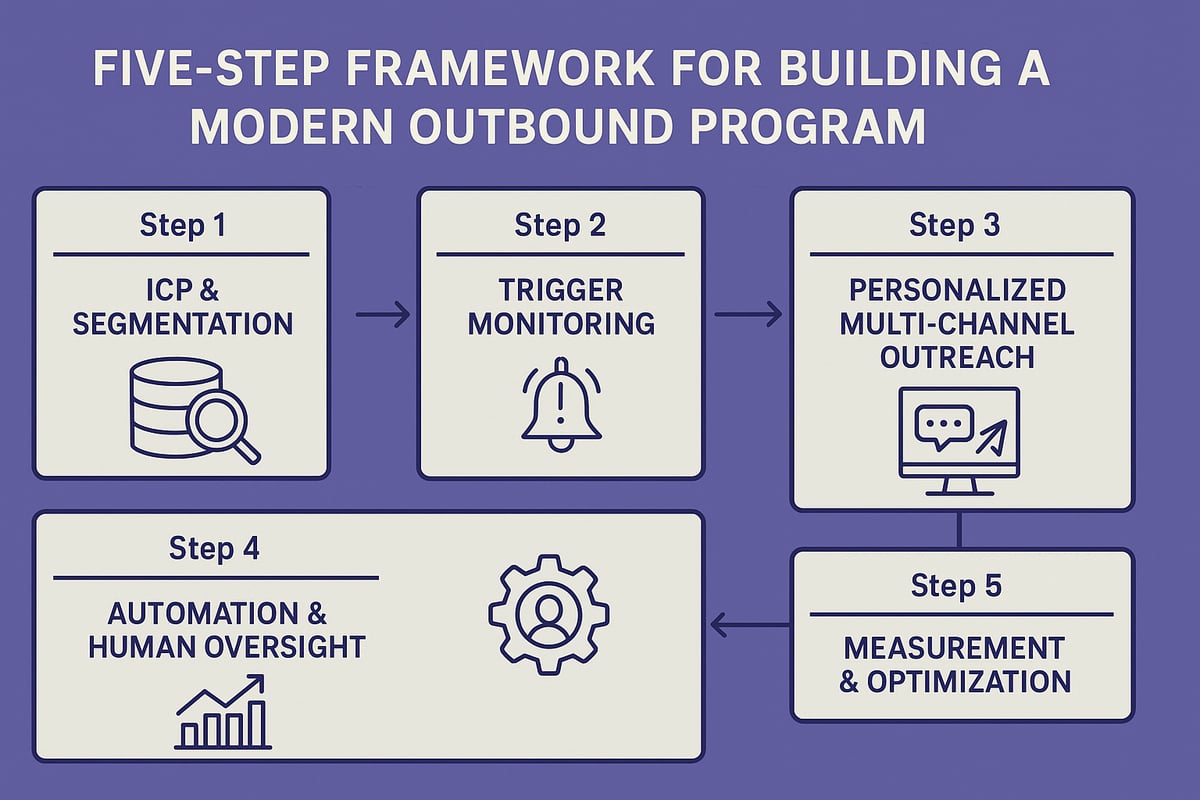
Step 1: Define Your Ideal Customer Profile (ICP) and Target Segments
The first step to define outbound success is establishing a crystal-clear Ideal Customer Profile. Your ICP acts as a blueprint, helping you focus on accounts that fit your product, budget, and sales cycle.
Begin by gathering firmographics like industry, company size, and geography. Add technographics to understand their tech stack, and layer in behavioral data such as recent funding or product launches.
Segment your outbound list by industry, buyer role, and relevant buying triggers. For example, if you target SaaS companies, narrow your list to CTOs at firms who recently raised capital. This approach ensures every outbound effort aligns with your business goals.
| Segmentation Dimension | Example Criteria |
|---|---|
| Industry | SaaS, Fintech, Healthcare |
| Company Size | 50-500 employees |
| Role | CTO, VP Engineering |
| Trigger | Recent funding, new product |
A well-defined ICP is the foundation for targeted, high-impact outbound.
Step 2: Identify and Monitor Triggers
To define outbound in 2026, you must move beyond static lists. The next step is identifying and monitoring outbound triggers—those real-time signals that indicate a prospect is ready to engage.
Triggers include fundraising announcements, executive hires, industry awards, or even podcast appearances. Use modern intent data platforms and news monitoring tools to capture these opportunities as they happen.
Set up alerts for relevant signals so your team can act fast. For instance, if a target company appears in the news for a major product launch, that’s your cue for timely outreach. By acting on triggers, you increase the relevance and success of every outbound touch.
Step 3: Craft Personalized, Multi-Channel Outreach
Personalization is the heart of modern outbound. Once you define outbound targets and triggers, tailor your messaging for each prospect, referencing recent events, shared connections, or industry challenges.
Utilize frameworks like the problem/solution approach, value proposition statements, and social proof. Orchestrate your outreach across multiple channels—email, LinkedIn, phone calls, and even direct mail for high-value accounts.
A strong approach combines creativity with structure. For more on proven tactics, check out Effective strategies for outbound sales. Remember, prospects respond to relevance and value, not volume.
Step 4: Execute with Automation and Human Oversight
Automation streamlines outbound, but the human touch remains vital. Use sales engagement platforms to automate sequencing, scheduling, and initial follow-ups. Let AI draft messages based on triggers, then have sales reps personalize and approve before sending.
Human-in-the-loop processes ensure authenticity. SDRs can handle nuanced replies, customize outreach, and nurture relationships. This balance allows you to define outbound as efficient, yet deeply personal.
A workflow might look like this:
- AI scans for triggers and drafts outreach.
- SDR reviews, edits, and sends the message.
- Automated follow-ups are scheduled if no reply.
- SDR steps in for high-interest responses.
This hybrid approach empowers teams to scale without sacrificing quality.
Step 5: Measure, Optimize, and Scale
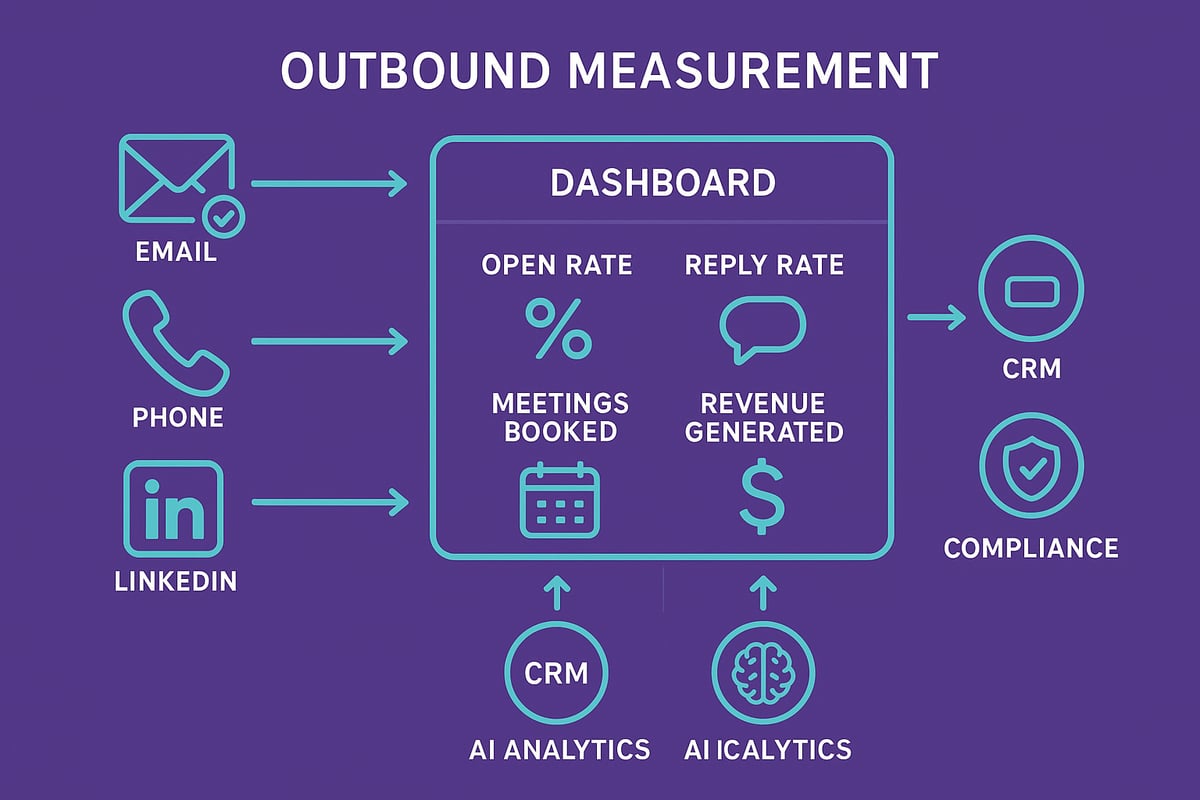
To truly define outbound excellence, measurement is non-negotiable. Track key metrics such as open rates, reply rates, meetings booked, and pipeline generated. Compare performance across channels—email, phone, LinkedIn—to identify what works best.
Use A/B testing to refine messaging and outreach timing. Analyze data continuously, optimizing playbooks based on what drives results. Successful teams benchmark against industry standards, aiming for reply rates of 15-25% with personalized outbound.
As you scale, replicate winning strategies across teams and adapt to new triggers or channels. The outbound process is never static—continuous improvement keeps your program ahead of the curve.
Outbound Metrics & Measurement: Proving ROI in 2026
Understanding how to define outbound success in 2026 hinges on clear, actionable metrics. Today’s B2B teams must move beyond vanity numbers and focus on measurements that connect outbound activity directly to pipeline and revenue. With outbound strategies evolving rapidly, leaders need reliable ways to track, analyze, and optimize every touchpoint.
Essential Metrics for Outbound Success
To define outbound performance, start with the fundamentals. The most effective programs measure response rates, engagement (opens, clicks, replies), and conversion rates such as meetings booked or opportunities created. Pipeline contribution and revenue attribution are also crucial, providing a direct link between outbound activities and business outcomes.
Channel-specific performance helps teams understand which tactics work best. For example, comparing email versus LinkedIn versus phone enables smarter allocation of resources. Account penetration and multi-threading metrics show how deeply you are engaging target accounts, a key factor in enterprise sales.
Here’s a quick summary:
| Metric | What It Measures | Why It Matters |
|---|---|---|
| Open Rate | % of emails opened | Gauges subject line effectiveness |
| Reply Rate | % of responses received | Indicates engagement |
| Meetings Booked | # of meetings secured | Shows conversion effectiveness |
| Pipeline Generated | Value of deals influenced | Connects outreach to revenue |
| Channel Performance | Results by channel (email, phone, etc.) | Optimizes channel strategy |
To deepen your understanding, see Understanding the outbound sales cycle for a practical breakdown of these metrics in action.
Attribution and Analytics Tools
To truly define outbound ROI, attribution is non-negotiable. Modern CRMs and sales engagement platforms are at the heart of measurement, capturing every interaction from first touch to closed deal. Multi-touch attribution models reveal which channels and messages drive conversion, rather than giving all credit to the last or first touch.
Integrating intent data and trigger analytics further sharpens your measurement. By tracking real-time signals—like when a prospect clicks a link or attends a webinar—teams can pinpoint what moves the needle. Custom dashboards offer at-a-glance insights into outreach performance, letting leaders make data-driven decisions with confidence.
Overcoming Measurement Challenges
Even with advanced tools, measuring outbound impact is not without hurdles. Complex multi-channel, multi-touch journeys can muddy attribution. Data hygiene is critical—dirty or unintegrated data can lead to misleading conclusions.
To define outbound measurement standards, teams must align on consistent tracking, integrate systems, and regularly audit their process. Benchmarking against industry standards helps set realistic goals and spot gaps. Remember, the most successful organizations treat measurement as a living process, not a static checklist.
- Common challenges:
- Attribution in multi-touch environments
- Data integration across platforms
- Setting meaningful, actionable benchmarks
Real-World Examples and Data Points
Let’s make it tangible. A SaaS company recently increased its outbound pipeline by 30% after shifting to trigger-based outreach. This approach allowed them to define outbound success around timely, relevant interactions, not just volume.
Industry data reinforces this: personalized outbound sees 2-3x higher response rates compared to generic campaigns, according to LinkedIn’s State of Sales. Measuring ROI from event-driven outbound, such as targeting prospects after a funding announcement, consistently outperforms cold campaigns.
In 2026, the ability to define outbound with precision—using the right metrics, tools, and analytics—will separate high-performing teams from the rest.
Outbound Challenges & Solutions: Navigating the Modern Landscape
In today's B2B world, leaders who define outbound strategies face a rapidly changing environment. Modern outbound programs must tackle complex challenges, from compliance to personalization, while keeping pace with new technologies. Understanding these obstacles is the first step to building a resilient, high-performance outbound engine.
Common Outbound Challenges
Every organization that seeks to define outbound in 2026 will encounter familiar hurdles. First, list fatigue is a growing concern. Reaching out to the same prospects repeatedly leads to diminishing returns and falling response rates.
Deliverability is another major challenge. Email filters, spam regulations, and evolving privacy standards like GDPR and CCPA make it harder to reach decision-makers. Staying compliant while maintaining effective outreach is now non-negotiable.
Personalization at scale remains a tough nut to crack. Prospects expect relevant, tailored messages, but sending generic outreach can damage your reputation. Companies also struggle with balancing automation and authenticity, as too much automation can make communications feel robotic.
Finally, aligning sales and marketing teams is critical. Without clear handoffs and shared goals, efforts to define outbound can become fragmented, leading to inconsistent results and missed opportunities.
Solutions and Innovative Approaches
To overcome these hurdles, organizations are rethinking how they define outbound. Leveraging AI for smarter targeting and trigger detection is one of the most effective tactics. AI tools can analyze vast datasets, surface high-intent prospects, and recommend optimal outreach times, making personalization at scale achievable.
Human-in-the-loop processes add quality control, ensuring that AI-suggested messages are reviewed and tailored by real people. Building opt-in, permission-based outbound programs helps maintain compliance and improves deliverability, as recipients are more receptive to relevant, timely outreach.
Training and enablement for SDRs and sales teams is crucial. By equipping teams with frameworks and feedback mechanisms, companies can continuously refine their approach. According to B2B Sales Trends and AI Integration, integrating predictive analytics and AI-driven insights into outbound workflows leads to smarter, more proactive engagement.
Continuous feedback loops are essential for adapting to changing buyer preferences. Teams that regularly review performance data can identify what works, pivot quickly, and scale successful tactics across the organization. All these methods help define outbound as a dynamic, results-driven discipline in 2026.
Examples and Industry Insights
Real-world examples underscore the effectiveness of these solutions. Companies that implement event-triggered outreach, such as contacting prospects following a funding announcement or conference appearance, report significantly higher response rates. In fact, recent data shows that 68% of buyers respond to outreach referencing a recent company event or announcement.
Personalized, timely engagement consistently outperforms generic, high-volume campaigns. Teams that define outbound strategies around quality, timing, and relevance see improved ROI and stronger pipeline growth. For instance, organizations leveraging AI and human oversight together have achieved reply rates up to three times higher than traditional approaches.
The message is clear: to define outbound for the future, focus on intelligent targeting, authentic engagement, and continuous improvement. These principles will set leaders apart in the evolving outbound landscape.
The Future of Outbound: Predictions and Emerging Opportunities
The future of outbound is being defined by a convergence of shifting buyer expectations, rapid technological innovation, and the need for authentic human connection. As we look toward 2026, organizations must not only adapt their strategies, but also rethink how they define outbound in a world where relevance and timing are everything.
Evolving Buyer Behaviors and Expectations
Today's B2B buyers are more digitally savvy and self-reliant than ever before. They research independently, expect instant access to information, and seek personalized outreach that speaks directly to their needs. By 2026, this trend will only accelerate.
Buyers demand relevance at every touchpoint. They quickly ignore generic or templated outreach, making it crucial for companies to define outbound strategies that put personalization at the core. Digital-first buyers also value transparency and authenticity, responding best to messages that demonstrate real understanding of their challenges.
To meet these expectations, organizations must harness data and insights to craft outreach that is timely, hyper-relevant, and tailored to each individual. Those who fail to adapt risk being left behind as buyers become even more discerning.
Technology Innovations on the Horizon
The next wave of outbound transformation revolves around intelligent automation, real-time data, and AI-powered insights. Tools that enable predictive analytics, intent detection, and conversational AI will redefine how teams identify and engage prospects.
Sales teams will use advanced platforms that surface buying signals, automate routine tasks, and suggest the best next actions. AI-driven personalization will allow messaging to dynamically adjust based on a prospect’s digital behavior, company news, or industry events.
To stay ahead, leaders should explore resources like AI-Driven Sales Prospecting in 2026, which details how AI is becoming essential for those looking to define outbound success in a competitive landscape.
Outbound and the Human Touch
Despite the rise of automation, the human element remains irreplaceable in outbound. Building trust and credibility requires genuine connection, empathy, and thoughtful engagement. Buyers can sense when communication is authentic versus automated.
In 2026, the most effective outbound programs will combine cutting-edge technology with skilled professionals who add context, creativity, and warmth to every interaction. Sales reps will leverage data and AI to inform their approach, but they will also use judgment and intuition to foster meaningful conversations.
Organizations that define outbound with a balance of automation and human insight will stand out, ensuring prospects feel valued rather than targeted.
New Channels and Formats
Outbound is no longer limited to email or phone calls. The channel mix is rapidly diversifying, with social selling, video messaging, and voice AI taking center stage. LinkedIn remains a powerhouse for B2B, but new digital communities and immersive experiences are emerging.
Companies are experimenting with event-driven outreach, personalized video introductions, and real-time engagement on niche platforms. Voice assistants and AI-powered chat are enabling faster, more natural conversations.
For a deeper dive into upcoming innovations, refer to the Future of Outbound Sales Automation, which explores how automation and new formats are expanding how we define outbound.
Strategic Recommendations for B2B Leaders
To thrive in 2026, B2B leaders must redefine outbound as a dynamic, data-driven, and human-centric discipline. Here are key actions to drive success:
- Invest in trigger-based, AI-powered outbound platforms.
- Prioritize hyper-personalization and real-time engagement.
- Foster strong collaboration between sales, marketing, and RevOps.
- Continuously measure, test, and refine outreach strategies.
- Stay agile and responsive to shifting buyer expectations.
Early adopters who define outbound with these principles are already seeing dramatic pipeline growth and higher ROI. For more insights on future-proofing your outbound strategy, visit The future of outbound sales.
By embracing these trends, technologies, and best practices, you will position your organization to lead the next era of outbound, ensuring every prospect interaction is meaningful and impactful.