Your Lead: Quality Over Quantity in B2B Outbound

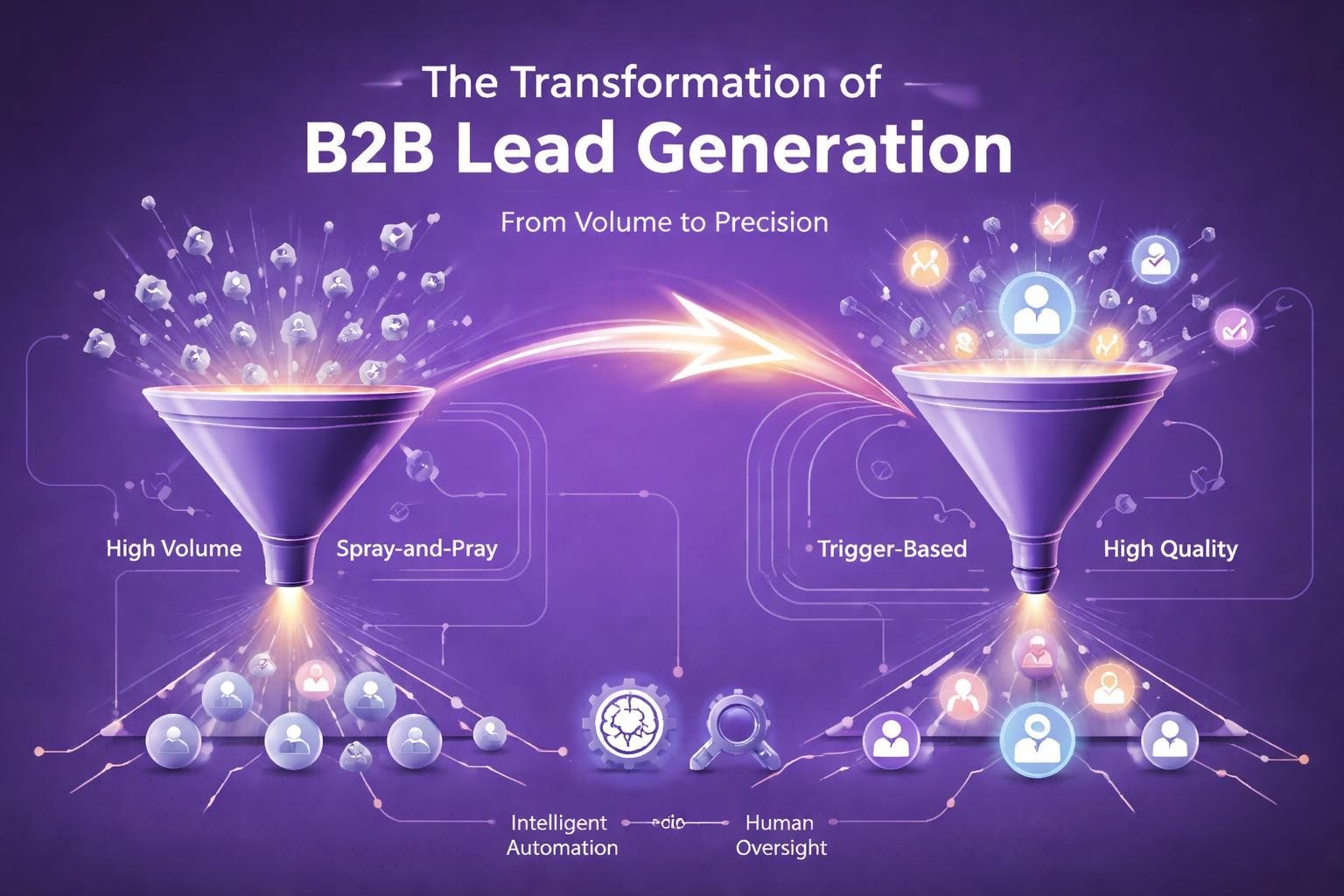
The quality of your lead matters more than the quantity of your leads. In 2026, B2B sales teams face a critical choice: chase thousands of unqualified prospects or focus on fewer, highly relevant opportunities. This decision determines whether your outbound efforts generate meaningful conversations or contribute to the noise your prospects are already ignoring. The era of spray-and-pray is over, replaced by a strategic approach that values precision, timing, and genuine relevance.
The Evolution of Lead Quality in Modern B2B Sales
The landscape of B2B outbound has transformed dramatically over the past three years. Sales teams once measured success by the volume of outreach activities, celebrating hundreds of daily touches regardless of response rates. This approach created fatigue among prospects and diminished returns for sales organizations.
Today's environment demands a different approach. Decision-makers receive countless automated messages daily, making them increasingly selective about which outreach deserves their attention. Your lead generation strategy must account for this reality by prioritizing relevance over volume.
Why Traditional Volume Metrics Fail
Traditional sales development relied on activity metrics that prioritized quantity. Teams sent thousands of generic messages weekly, hoping statistical probability would generate enough responses to justify the effort. This model fails in 2026 for several reasons:
- Decision-makers have developed sophisticated filters for irrelevant outreach
- Generic messaging signals lack of research and genuine interest
- High-volume approaches damage brand reputation and sender credibility
- Response rates continue declining as prospect inboxes become more crowded
The shift toward quality reflects broader changes in how B2B buyers make decisions. According to research on lead poisoning prevention, understanding exposure sources and timing proves critical to effective intervention. Similarly, understanding when and why your lead becomes receptive determines outbound success.
Trigger-Based Prospecting: The Foundation of Quality Leads
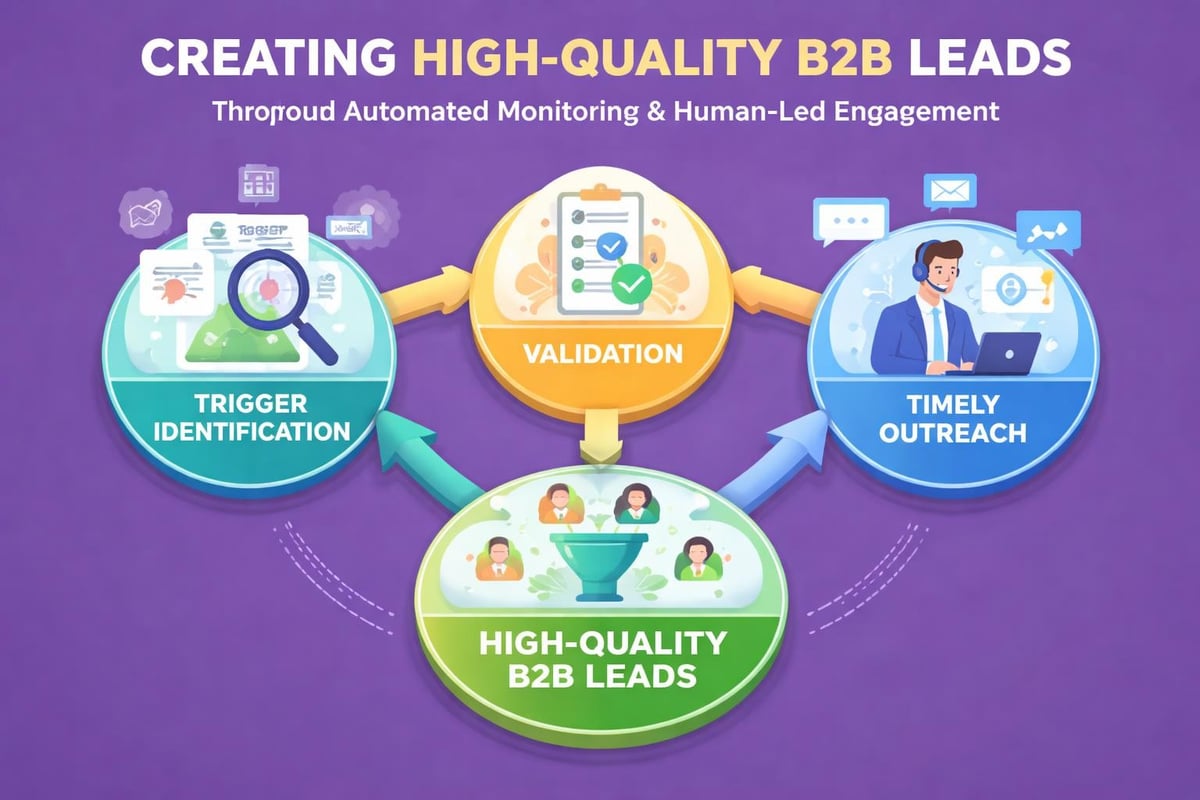
Trigger-based prospecting represents the most significant advancement in lead generation over the past five years. Instead of reaching out to prospects at random times, this approach identifies specific events that indicate buying intent or openness to conversation.
Your lead becomes substantially more valuable when contacted at the right moment. A company that just announced Series B funding has different priorities than one operating in steady-state mode. A hiring manager who posted a new position has immediate needs that align with specific solutions.
Identifying Meaningful Triggers
Not all triggers carry equal weight. The most effective trigger events share common characteristics that make your lead more receptive to outreach:
Funding announcements signal growth intent, budget availability, and willingness to invest in new solutions. Companies typically restructure processes and evaluate new vendors within 90 days of major funding rounds.
Executive changes create opportunities for relationship building and process evaluation. New leaders often review existing vendors and seek solutions that align with their strategic vision.
Content publication reveals priorities, challenges, and strategic thinking. When your lead publishes an article or appears on a podcast, they signal expertise in specific areas and openness to industry dialogue.
Hiring patterns expose operational gaps and growth areas. A company hiring for specific roles demonstrates commitment to building capabilities in those domains.
The key to trigger-based prospecting lies in matching trigger types to your solution's value proposition. A fundraising announcement matters more for infrastructure solutions than for tactical tools. Understanding these connections improves your lead quality exponentially.
The Role of Human Intelligence in Lead Qualification
Automation handles data collection and pattern recognition effectively, but human judgment remains essential for lead qualification. The most successful outbound programs in 2026 combine technological efficiency with human discernment.
Your lead requires human evaluation at critical decision points throughout the qualification process. While AI identifies potential triggers and matches them to account criteria, sales professionals assess context, timing, and message appropriateness.
| Automation Strengths | Human Intelligence Requirements |
|---|---|
| Monitor thousands of data sources continuously | Interpret trigger significance within industry context |
| Identify pattern matches and trigger events | Assess account readiness and stakeholder dynamics |
| Execute consistent outreach workflows | Craft nuanced messaging that resonates with specific situations |
| Track engagement metrics and response patterns | Adjust strategy based on qualitative feedback and conversation cues |
This division of labor maximizes both efficiency and effectiveness. Technology handles scale while humans provide judgment, creativity, and relationship-building capabilities that AI cannot replicate.
Building Messages That Reflect Lead Context
Generic templates destroy the value of trigger-based timing. Your lead deserves messaging that demonstrates genuine awareness of their specific situation. This requires moving beyond basic personalization tokens to substantive customization.
Effective trigger-based messages accomplish three objectives simultaneously:
- Reference the specific trigger event with appropriate context
- Connect the trigger to relevant business challenges or opportunities
- Offer perspective or value beyond a simple sales pitch
A company that just hired a VP of Sales doesn't need generic outreach about sales tools. They need insights about building effective sales processes, onboarding new teams, or establishing metrics frameworks. Your message should position you as someone who understands their situation, not just another vendor seeking attention.
Measuring Quality: Metrics That Matter for Your Lead
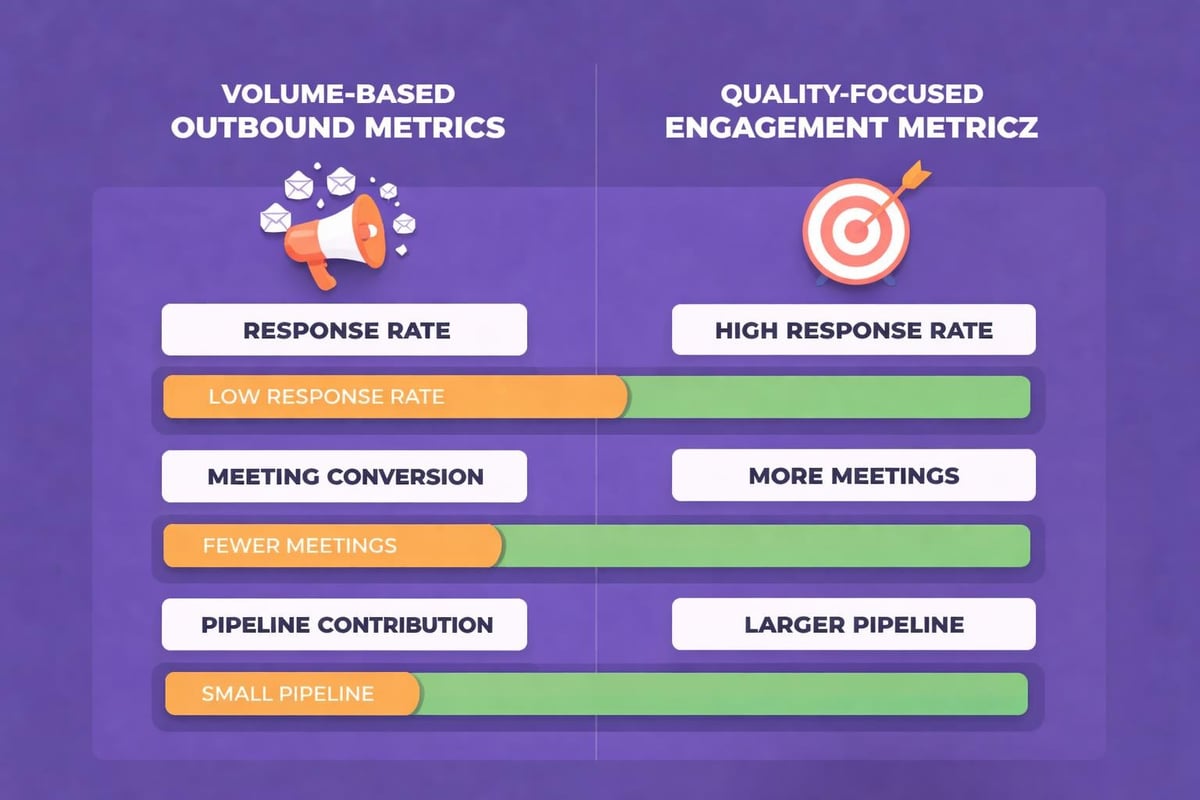
Traditional outbound metrics focus on volume and activity: emails sent, calls made, LinkedIn messages delivered. These numbers matter less than metrics that reflect lead quality and engagement depth.
Quality Indicators for Outbound Programs
Response rate serves as the primary quality indicator. When your lead responds positively, it validates both timing and relevance. Response rates above 15% for cold outbound indicate strong lead quality and message-market fit.
Meeting conversion rate measures how effectively initial responses transform into substantive conversations. Your lead moving from response to scheduled meeting demonstrates genuine interest and qualification.
Pipeline contribution tracks the business impact of outbound efforts beyond vanity metrics. Leads that progress through your sales cycle and generate revenue justify the focused approach.
Quality-focused metrics framework:
- Response rate (target: 15-25% for trigger-based outreach)
- Meeting conversion (target: 40-60% of positive responses)
- Sales accepted lead rate (target: 30-50% of meetings)
- Pipeline velocity from outbound sources
- Average deal size for outbound-sourced opportunities
According to OSHA workplace lead exposure guidelines, measurement and monitoring prove essential for maintaining safe environments. Similarly, consistent measurement of lead quality metrics ensures your outbound program maintains effectiveness and avoids degrading into low-quality mass outreach.
Avoiding Common Pitfalls in Lead Generation
Even sophisticated teams fall into patterns that diminish lead quality. Recognizing these pitfalls helps maintain focus on what matters: creating genuine connections with qualified prospects at opportune moments.
The Quantity Temptation
Pressure for pipeline coverage creates temptation to expand outreach volume. Leadership sees gaps in projected revenue and requests more activity. This pressure leads teams to lower targeting standards, reduce personalization, and contact prospects without strong trigger events.
Resist this temptation. Your lead quality deteriorates rapidly when volume increases beyond your team's capacity for meaningful personalization and research. Better to send fewer messages that generate strong responses than thousands that produce nothing.
Over-Automation Without Human Oversight
AI SDRs promise complete automation of outbound processes. These tools identify prospects, craft messages, and manage follow-up sequences without human involvement. While appealing from an efficiency standpoint, this approach often sacrifices the judgment and adaptability that make outbound effective.
Your lead deserves better than fully automated outreach that lacks human context. The most effective approach combines automated trigger detection with human message crafting and relationship management, as explored in personalizing outreach at scale.
Ignoring Negative Signals
Not every trigger event represents an actual opportunity. Your lead may have just hired someone specifically to avoid needing your solution. They may have published content expressing frustration with vendors in your category.
Pay attention to negative indicators that suggest poor timing or fit:
- Recent vendor selection in your category
- Budget cuts or hiring freezes
- Public statements criticizing solutions like yours
- Leadership changes that deprioritize your focus area
Building Sustainable Outbound Systems
Sustainable outbound requires systems that maintain quality standards regardless of team size or market conditions. These systems combine technology, process, and culture in ways that prevent quality degradation over time.
Technology Stack for Quality-Focused Outbound
Your lead deserves outreach powered by integrated tools that support research, timing, and personalization:
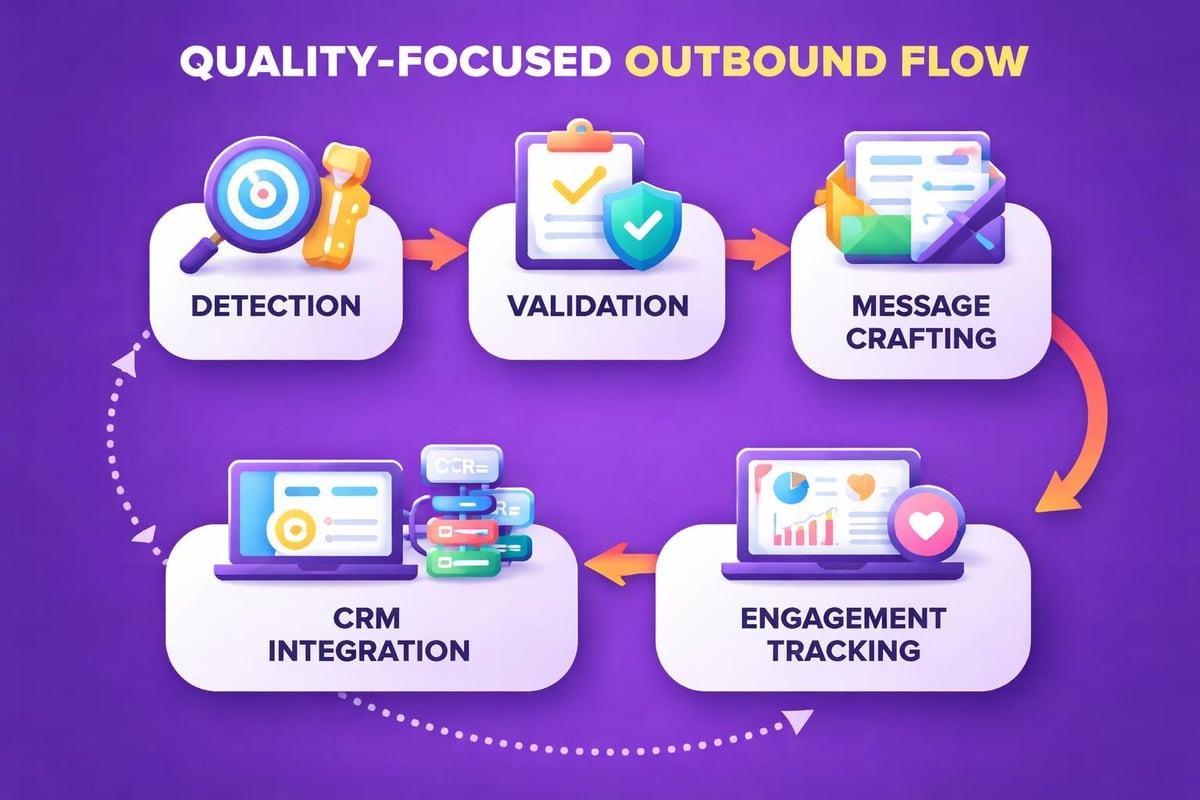
Modern trigger detection platforms monitor multiple data sources simultaneously, identifying relevant events as they occur. These tools track funding announcements, hiring patterns, content publication, technology changes, and executive movements across your target account universe.
CRM integration ensures trigger data flows seamlessly into your sales workflow. Your lead's trigger history becomes part of their account record, informing all future interactions and strategy decisions.
Message crafting tools support personalization at scale without sacrificing quality. These platforms provide frameworks for incorporating trigger context, company research, and role-specific value propositions into outreach templates that sales professionals customize for individual prospects.
The National Institute of Environmental Health Sciences emphasizes coordinated approaches to addressing lead exposure. Similarly, coordinated technology systems ensure all components of your outbound program work together effectively.
Training Teams for Quality-First Outbound
Technology enables quality, but people deliver it. Sales development teams require specific training to execute trigger-based outbound effectively, moving beyond the activity-focused habits developed in high-volume environments.
Core Competencies for Modern SDRs
Research skills form the foundation of quality outbound. Your lead expects outreach that demonstrates understanding of their business, industry, and specific situation. SDRs must learn to efficiently gather and synthesize information from multiple sources.
Contextual writing separates effective outreach from generic spam. Training should develop ability to connect trigger events to business implications, craft relevant value propositions, and communicate with appropriate tone for different seniority levels.
Qualification discipline ensures teams focus energy on truly promising opportunities. Not every trigger event justifies outreach. SDRs need frameworks for evaluating trigger significance, account fit, and timing appropriateness before investing effort in personalized outreach.
Strategic follow-up maximizes value from initial responses. Your lead who responds positively deserves thoughtful nurture that builds relationship and advances toward meetings. This requires moving beyond automated sequences to adaptive communication based on engagement signals.
High-ticket sales require particularly sophisticated approaches, as detailed in our high-ticket sales playbook.
The Future of Lead Quality
The trajectory toward quality over quantity will accelerate through 2026 and beyond. Several trends reinforce this direction and raise the bar for what constitutes effective outbound.
Buyer expectations continue rising as decision-makers become more sophisticated about filtering irrelevant outreach. Your lead expects research-backed messaging that demonstrates genuine understanding and offers substantive value from first contact.
Technology capabilities expand to support increasingly precise targeting and timing. Advanced AI identifies subtle trigger patterns invisible to human observers while enabling personalization at greater scale without sacrificing quality.
Regulatory environment evolves to protect buyers from unwanted outreach. Privacy laws and platform policies increasingly favor permission-based communication, making relationship quality essential for sustained access to prospects.
Adapting to Increased Competition for Attention
As more organizations adopt trigger-based approaches, competition for your lead's attention intensifies even within the quality-focused segment. Differentiation requires going beyond basic trigger identification to develop unique perspectives and creative engagement strategies.
The teams that succeed will combine technical sophistication with human creativity, using triggers as starting points for substantive conversations rather than simple outreach justification. According to EPA guidance on reducing lead exposure, prevention requires understanding multiple sources and pathways. Similarly, winning your lead's attention requires understanding multiple factors that influence receptivity and crafting approaches that address these factors comprehensively.
Implementing Quality-Focused Outbound in Your Organization
Transitioning from volume-based to quality-focused outbound requires deliberate change management. Organizations face cultural resistance, metric adjustments, and workflow redesign.
Start with pilot programs that demonstrate quality-focused approaches before organization-wide rollout. Select a segment of your target market and implement trigger-based prospecting with appropriate personalization and human oversight. Measure results against control groups using traditional approaches.
Implementation roadmap:
- Define quality metrics and establish baseline measurements
- Identify trigger types most relevant to your solution and buyer personas
- Build technology infrastructure for trigger detection and workflow integration
- Train sales development team on research, writing, and qualification skills
- Launch pilot program with subset of target accounts
- Measure results and refine approach based on data and feedback
- Scale successful practices while maintaining quality standards
Cultural change proves most challenging. Teams accustomed to activity-based metrics resist approaches that reduce outreach volume. Leadership must reinforce that your lead quality matters more than activity levels, celebrating response rates and pipeline contribution rather than touches logged.
For organizations struggling with these transitions, examining proven outbound sales strategies provides valuable frameworks and benchmarks.
Quality-focused outbound transforms your lead from a name in a database to a genuine business opportunity pursued at the optimal moment. By combining trigger-based timing with human intelligence and personalized messaging, your sales team creates conversations that matter rather than noise that prospects ignore. Samplead empowers your team with automated trigger detection and intelligent workflows that maintain quality standards while scaling your outbound efforts, keeping humans in control of the relationships that drive revenue.