Sales Rep Excellence: Quality Outbound Strategies for 2026


The modern sales rep faces a dramatically different landscape than their predecessors. Gone are the days when success meant making hundreds of cold calls and sending thousands of generic emails. Today's high-performing sales rep operates at the intersection of technology and human insight, leveraging automation to enhance rather than replace their expertise. In the era of AI-powered sales development tools and sophisticated outbound platforms, the most successful sales professionals distinguish themselves through quality engagement, strategic timing, and genuine relationship-building. This shift represents not just a change in tactics, but a fundamental transformation in how B2B sales teams approach their craft.
The Evolving Role of the Modern Sales Rep
The traditional sales representative job description has undergone substantial revision. While core responsibilities like prospecting, relationship management, and quota achievement remain constant, the execution methods have transformed entirely. A contemporary sales rep must balance technical proficiency with interpersonal skills, navigating CRM systems, automation platforms, and data analytics while maintaining authentic human connections.
Today's sales rep responsibilities include:
- Identifying and qualifying high-potential prospects through data-driven research
- Crafting personalized outreach based on specific buyer signals and triggers
- Managing complex sales cycles involving multiple stakeholders
- Leveraging automation tools while maintaining message authenticity
- Building consultative relationships that extend beyond transactional interactions
The shift toward trigger-based prospecting has fundamentally altered how effective sales reps allocate their time. Rather than casting wide nets with generic messaging, successful professionals now focus on timely, relevant outreach triggered by specific buyer actions or business events. This approach aligns perfectly with quality over quantity principles in outbound sales, where a single well-timed message to the right prospect outperforms dozens of irrelevant contacts.
Quality Metrics That Matter
The metrics that define sales rep success have evolved alongside these changing responsibilities. Traditional volume-based KPIs like calls per day or emails sent have given way to engagement-focused measurements that better reflect actual pipeline impact.
| Traditional Metrics | Modern Metrics | Why It Matters |
|---|---|---|
| Calls per day | Response rate | Measures actual engagement quality |
| Emails sent | Meeting conversion | Tracks meaningful progression |
| Contacts reached | Pipeline generated | Reflects revenue potential |
| Activity volume | Deal velocity | Indicates sales efficiency |
Trigger-Based Prospecting: The Sales Rep's Competitive Edge
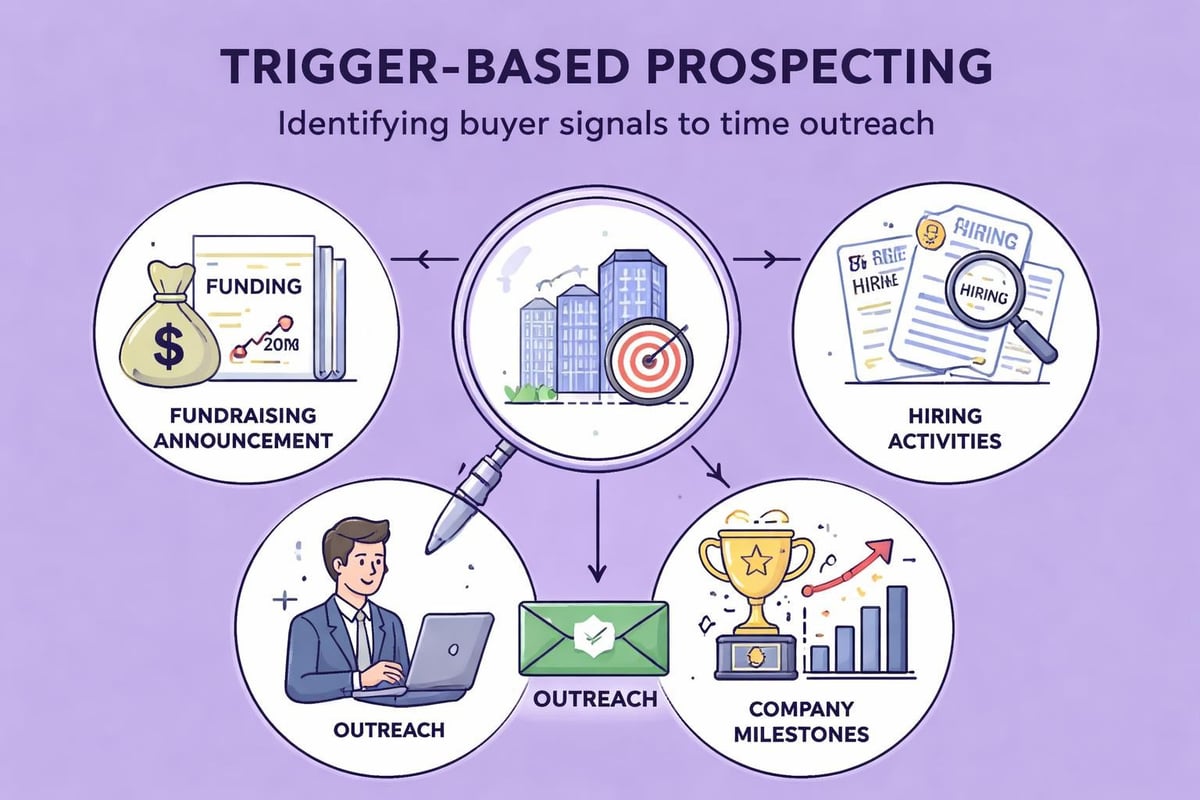
Trigger-based prospecting represents the most significant advancement in sales rep methodology over the past decade. This approach transforms random outreach into strategic engagement by identifying specific signals that indicate buying readiness or organizational change. When a prospect company announces new funding, hires key executives, or publishes thought leadership content, these triggers create natural conversation starters that elevate a sales rep's credibility.
The power of this methodology lies in its relevance. Consider the difference between a generic "I noticed you're in the SaaS industry" message versus "I saw your recent Series B announcement and congratulations are in order. As you scale from 50 to 200 employees, companies typically face specific challenges around..." The latter demonstrates genuine awareness and positions the sales rep as a valuable resource rather than another interruption.
High-impact trigger categories include:
- Fundraising announcements (Series rounds, venture capital investments)
- Executive hiring or organizational restructuring
- Product launches or major feature releases
- Industry awards or recognition
- Podcast appearances or published articles
- Conference speaking engagements
- Geographic expansion announcements
Implementing trigger-based prospecting requires sales reps to maintain consistent monitoring across multiple channels. LinkedIn remains the primary platform for B2B trigger identification, offering real-time updates on company activities, personnel changes, and content publication. However, successful sales reps supplement LinkedIn monitoring with news aggregation tools, company press pages, and industry publications to capture triggers that might otherwise slip through the cracks.
The personalization opportunities created by trigger-based approaches enable sales reps to craft messages that feel genuinely relevant rather than mass-produced. This authenticity drives significantly higher response rates, with research showing trigger-based messages generating 3-5x the engagement of generic outreach.
Balancing Automation and Human Touch
The proliferation of AI SDR platforms has created an important inflection point for sales reps. These technologies promise to automate entire prospecting workflows, from research through initial outreach and follow-up sequences. Yet the most successful sales organizations recognize that automation should empower their sales reps, not replace them.
Effective automation preserves the human element in three critical ways:
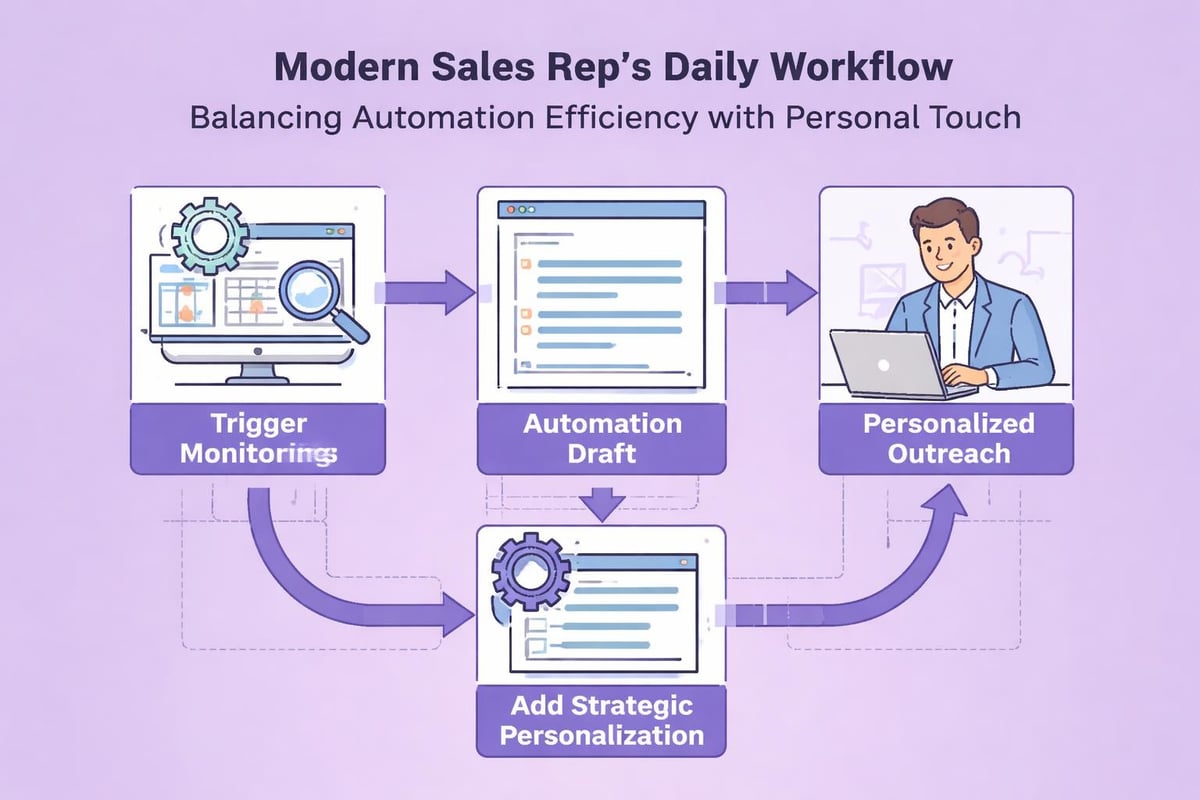
First, automation handles the repetitive research and monitoring tasks that drain sales rep productivity. Rather than manually checking LinkedIn for prospect updates or scanning news sites for company announcements, automated systems surface relevant triggers and prepare briefing materials. This allows the sales rep to focus their energy on strategic thinking and personalized communication.
Second, quality automation maintains message authenticity by incorporating genuine personalization variables beyond basic mail merge fields. A skilled sales rep reviews and refines automated drafts, ensuring each message reflects actual understanding of the prospect's situation rather than superficial customization.
Third, automation creates space for the consultative conversations where sales reps deliver maximum value. When technology handles initial qualification and scheduling logistics, sales professionals can dedicate their time to discovery calls, needs analysis, and relationship development where human judgment and empathy prove irreplaceable.
The Sales Rep's Technology Stack
Modern sales reps leverage a sophisticated technology stack that enhances their capabilities without diminishing their role. This ecosystem typically includes:
- CRM platforms for relationship tracking and pipeline management
- Sales engagement tools for multi-channel outreach orchestration
- Intelligence platforms for prospect research and enrichment
- Automation systems for trigger monitoring and workflow optimization
- Analytics dashboards for performance measurement and forecasting
The key differentiator lies in how sales reps utilize these tools. High performers use technology to inform their judgment rather than replace it, reviewing automated recommendations with critical thinking and adjusting approaches based on nuanced understanding of prospect contexts.
Mastering High-Value B2B Sales Cycles
Sales reps pursuing high Annual Contract Value (ACV) deals face substantially different dynamics than those in transactional sales environments. These complex cycles demand patience, strategic account planning, and the ability to navigate multiple stakeholder relationships across extended timeframes. The unique challenges of high-ticket sales require sales reps to think beyond quick closes toward sustained value delivery.
In enterprise environments, a single sales rep often coordinates with procurement teams, technical evaluators, executive decision-makers, and end users. Each stakeholder brings different priorities, concerns, and evaluation criteria. Successful sales reps develop sophisticated stakeholder maps that identify key influencers, understand their individual motivations, and craft tailored value propositions that address specific pain points.
Critical skills for high-ACV sales reps:
- Business acumen that enables peer-level conversations with executives
- Technical fluency sufficient to engage credibly with implementation teams
- Financial modeling capabilities to demonstrate clear ROI
- Political navigation to understand organizational dynamics
- Patience and persistence to sustain momentum across 6-12 month cycles
The relationship-building aspect becomes paramount in these extended sales cycles. A sales rep working a six-month enterprise deal cannot rely on transactional tactics or aggressive closing techniques. Instead, they position themselves as trusted advisors who understand the prospect's business challenges, industry context, and organizational objectives. This consultative approach requires deep research, active listening, and the ability to connect product capabilities to specific business outcomes.
Sales Enablement and Continuous Development
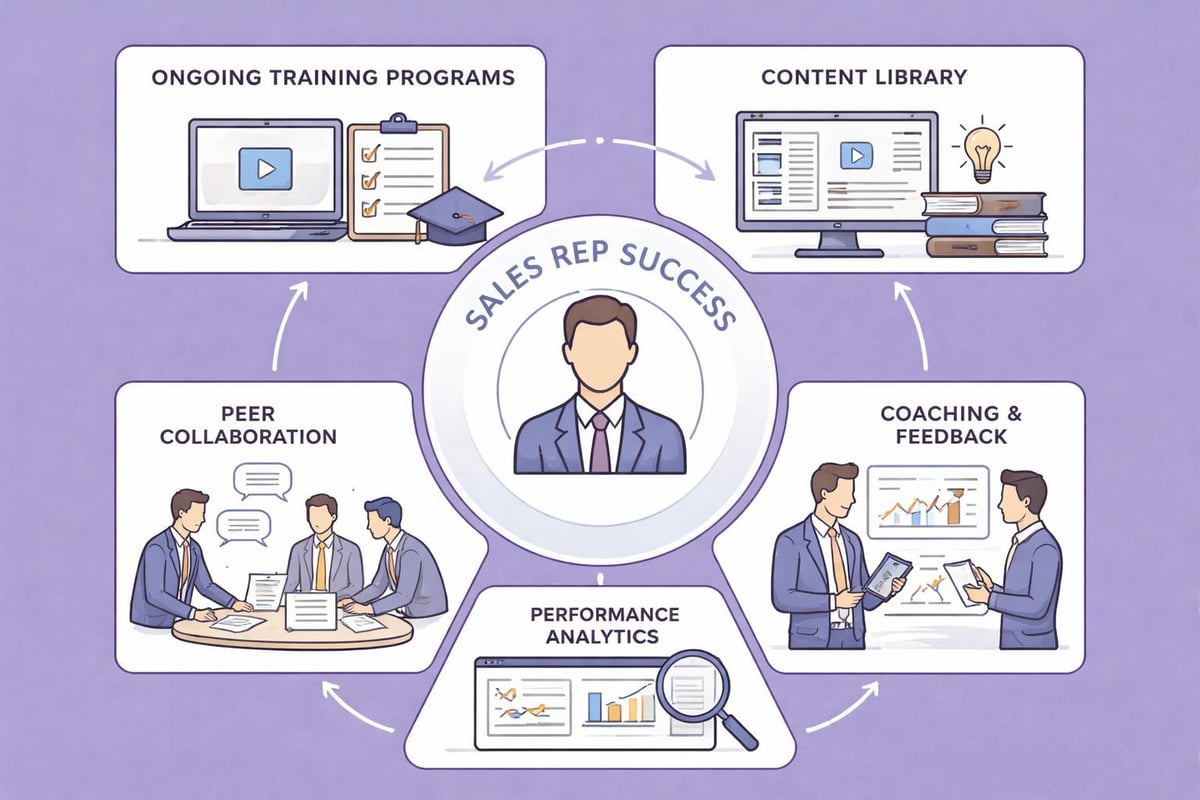
The most successful sales reps commit to continuous skill development and actively leverage sales enablement best practices to enhance their effectiveness. This commitment separates top performers from those who plateau after initial onboarding. Sales enablement provides the training, content, and tools that empower sales reps to engage prospects more effectively and close deals more efficiently.
Essential Sales Rep Training Areas
| Training Category | Key Components | Business Impact |
|---|---|---|
| Product Knowledge | Feature mastery, use case scenarios, competitive differentiation | Builds credibility and confidence |
| Industry Expertise | Market trends, regulatory landscape, common challenges | Enables consultative conversations |
| Sales Methodology | Discovery techniques, objection handling, closing strategies | Improves conversion rates |
| Technology Proficiency | CRM optimization, automation tools, analytics platforms | Increases productivity |
Beyond formal training programs, elite sales reps develop personal learning systems that keep them current on industry developments, competitive movements, and emerging best practices. This might include regular consumption of sales podcasts, participation in professional communities, and systematic review of winning call recordings to identify improvement opportunities.
The importance of collaborative team environments cannot be overstated. Sales reps who actively share insights, workshop challenging deals with peers, and contribute to collective knowledge bases consistently outperform isolated individuals. Organizations that foster this collaborative culture see better overall team performance and faster new hire ramp times.
Customer-Centric Selling in 2026
The fundamental orientation of successful sales reps has shifted from product-focused pitching to customer-centric problem-solving. This transition reflects broader market maturity where buyers possess extensive product information before ever speaking with a sales rep. In this environment, the sales professional's value comes not from information delivery but from insight, customization, and strategic guidance.
Implementing customer service best practices within the sales process creates differentiation and builds trust. Sales reps who approach prospects with genuine curiosity about their challenges, listen actively without rushing to solutions, and demonstrate willingness to walk away from poor-fit opportunities establish credibility that transcends typical vendor relationships.
Customer-centric sales rep behaviors include:
- Conducting thorough discovery before presenting solutions
- Asking clarifying questions that demonstrate business understanding
- Offering relevant insights even when they don't directly benefit the sale
- Connecting prospects with industry peers or resources beyond their product
- Following up with value-added content rather than persistent closing attempts
This approach proves particularly effective in trigger-based prospecting scenarios. When a sales rep reaches out following a relevant trigger, their initial conversation should focus on understanding the implications of that trigger for the prospect's business rather than immediately pitching a solution. This consultative orientation builds rapport and positions the sales rep as a strategic partner rather than another vendor.
Optimizing LinkedIn for Modern Sales Reps
LinkedIn has evolved into the primary hunting ground for B2B sales reps, functioning as both research platform and engagement channel. However, effective LinkedIn utilization extends far beyond connection requests and generic messaging. Sophisticated sales reps develop multi-faceted LinkedIn strategies that build personal brands, demonstrate thought leadership, and create inbound interest alongside outbound prospecting.
The platform's native features offer sales reps powerful tools for identifying prospects and understanding their contexts. Sales Navigator provides advanced search filters, lead recommendations, and relationship insights that streamline targeting. Regular engagement with prospect content, sharing of relevant insights, and participation in industry conversations increases visibility and warms relationships before direct outreach.
Increasing response rates on LinkedIn requires careful attention to profile optimization, message timing, and value proposition clarity. Sales reps with complete, professional profiles that clearly articulate their expertise and the value they provide see significantly higher acceptance and response rates than those with sparse or overly promotional profiles.
LinkedIn Engagement Strategy
Effective sales reps maintain consistent LinkedIn presence through:
- Daily content engagement: Commenting thoughtfully on prospect and industry posts
- Weekly content sharing: Publishing or curating relevant insights for their network
- Profile optimization: Maintaining current, professional presentation with clear value proposition
- Strategic networking: Building connections within target accounts and industries
- Message personalization: Crafting outreach that references specific profile elements or recent activity
The key lies in balancing automation with authenticity. While tools can streamline connection management and message sequences, the most effective sales reps inject personal observations and genuine value into each interaction. This approach prevents the generic, templated feel that immediately signals automated outreach to savvy prospects.
Measuring and Improving Sales Rep Performance
Data-driven performance management separates exceptional sales organizations from mediocre ones. Sales reps benefit from clear visibility into their metrics, understanding not just their quota attainment but the underlying activities and conversion rates that drive revenue results. This transparency enables proactive course correction rather than reactive scrambling at quarter end.
Core performance indicators for sales reps include:
- Pipeline coverage ratio: Total pipeline value relative to quota
- Win rate: Percentage of qualified opportunities that close successfully
- Average deal size: Revenue per closed deal
- Sales cycle length: Time from first contact to closed-won
- Activity metrics: Outreach volume balanced against quality indicators
The relationship between activity metrics and outcomes deserves particular attention. While maintaining sufficient outreach volume matters, the correlation between quantity and results breaks down when quality suffers. A sales rep sending 100 generic LinkedIn messages weekly will underperform compared to one sending 30 highly personalized, trigger-based messages to carefully qualified prospects.
Regular performance reviews should focus on both lagging indicators (closed revenue) and leading indicators (pipeline generation, meeting bookings, proposal submissions). This dual focus allows sales reps to understand whether current activities will yield future results or require adjustment. When pipeline coverage drops below healthy thresholds, immediate activity modifications prevent future quota shortfalls.
Performance Improvement Frameworks
| Challenge Area | Diagnostic Question | Improvement Action |
|---|---|---|
| Low response rates | Are messages personalized and trigger-based? | Implement trigger monitoring and increase personalization |
| Poor conversion to meetings | Does outreach communicate clear value proposition? | Refine messaging with customer-centric benefits |
| Stalled deals | Are we engaging all stakeholders? | Develop comprehensive stakeholder maps |
| Long sales cycles | Can we identify and address blockers earlier? | Implement more rigorous qualification |
Sales reps who actively analyze their own performance data, identify patterns in successful deals, and systematically test new approaches demonstrate the growth mindset essential for long-term success. This analytical orientation transforms sales from art to science, enabling continuous refinement and optimization.
Building Sustainable Prospecting Systems
Inconsistent prospecting represents one of the most common sales rep challenges. The natural tendency to focus on active deals at the expense of new pipeline development creates boom-bust cycles where closed deals aren't replaced by advancing opportunities. Successful sales reps implement systematic prospecting habits that maintain steady pipeline flow regardless of current deal load.
Time blocking proves essential for sustainable prospecting. Sales reps who dedicate specific calendar blocks exclusively to new outreach, protected from meeting encroachment and administrative tasks, consistently outperform those who prospect opportunistically. This discipline ensures that pipeline development receives appropriate attention even during busy closing periods.
Trigger-based prospecting approaches provide natural structure for these prospecting blocks. Rather than staring at blank screens wondering whom to contact, sales reps review trigger notifications, research flagged prospects, and craft contextually relevant outreach. This trigger-driven workflow eliminates decision paralysis and ensures every prospecting session yields meaningful output.
Sustainable prospecting system components:
- Daily trigger review: 15-30 minutes evaluating new prospect signals
- Research and enrichment: Understanding prospect context before outreach
- Personalized messaging: Crafting relevant, value-focused initial contact
- Multi-touch sequences: Planning follow-up cadence for non-responders
- Pipeline review: Weekly evaluation of coverage and advancement
The integration of automation within these systems amplifies sales rep productivity without sacrificing quality. Automated trigger monitoring surfaces opportunities that manual research would miss, while templated message frameworks accelerate composition without eliminating personalization. The sales rep remains firmly in control, reviewing and refining automated suggestions rather than blindly executing them.
The modern sales rep role demands strategic thinking, technical proficiency, and unwavering commitment to quality engagement over empty activity. Those who embrace trigger-based prospecting, leverage automation thoughtfully, and maintain authentic customer focus will thrive in increasingly competitive B2B environments. Samplead empowers your sales team with intelligent trigger-based prospecting that identifies optimal outreach moments while keeping your reps firmly in control of every conversation. Our platform automates the research and monitoring that drains productivity, freeing your team to focus on what they do best: building relationships and closing deals.