Company Executives: Roles, Responsibilities & Strategy


The success of any B2B organization fundamentally depends on the vision, strategy, and execution capabilities of its leadership team. Company executives set the direction for entire organizations, making decisions that impact thousands of employees and millions in revenue. For businesses selling high-value solutions, understanding the dynamics of executive leadership becomes even more critical. The C-suite drives purchasing decisions, shapes organizational priorities, and determines which strategic partnerships merit investment. As the business landscape evolves in 2026, company executives face unprecedented challenges including digital transformation, remote workforce management, and increasingly complex competitive environments that require both strategic thinking and rapid adaptation.
Understanding the Executive Hierarchy
Company executives occupy the highest levels of organizational authority, with each position carrying distinct responsibilities and spheres of influence. The C-suite encompasses various roles that collectively govern an organization's strategic direction, operational efficiency, and financial health.
The Chief Executive Officer (CEO)
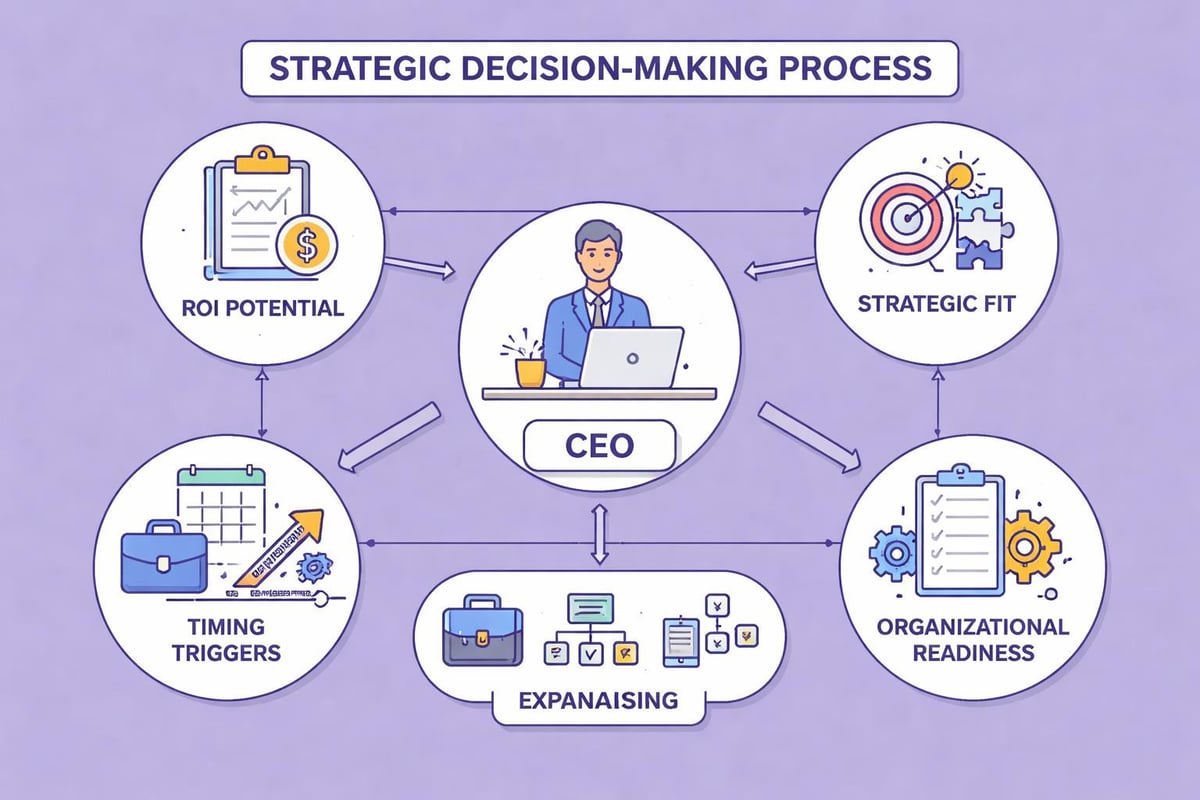
The CEO stands at the apex of corporate leadership, bearing ultimate responsibility for organizational success or failure. This executive sets the vision, establishes company culture, and makes final decisions on major strategic initiatives. CEOs in B2B environments particularly focus on long-term growth strategies, market positioning, and building relationships with key stakeholders.
Their daily responsibilities include:
- Strategic planning for 3-5 year horizons
- Board communication and stakeholder management
- Resource allocation across departments and initiatives
- Culture development that aligns with business objectives
- Public representation of the company's mission and values
For organizations targeting executive-level decision makers, understanding that CEOs prioritize ROI, competitive advantage, and scalable solutions becomes essential. They respond to outreach that demonstrates clear value propositions and strategic alignment with their organizational goals.
Financial Leadership: The CFO
The Chief Financial Officer manages all financial aspects of the organization, from budget planning to investor relations. Company executives in this role serve as strategic partners to CEOs, providing data-driven insights that inform major business decisions. The CFO's influence extends far beyond accounting, encompassing risk management, capital structure, and financial forecasting.
In 2026, CFOs increasingly drive technology adoption decisions, particularly for tools that promise efficiency gains or cost reduction. They evaluate potential investments through rigorous financial lenses, demanding clear metrics and measurable outcomes.
| CFO Priorities | Impact on Purchasing Decisions |
|---|---|
| Cost reduction | Seeks automation and efficiency tools |
| Revenue growth | Invests in sales enablement platforms |
| Risk mitigation | Values proven solutions with strong case studies |
| Compliance | Requires robust security and governance features |
When personalizing outreach at scale, messaging to CFOs should emphasize financial returns, implementation efficiency, and risk reduction. These executives respond to data-driven narratives that demonstrate clear paths to profitability.
Operational Excellence: The COO
The Chief Operating Officer transforms strategic vision into operational reality. Company executives in COO roles focus on day-to-day business functions, process optimization, and organizational efficiency. They bridge the gap between executive strategy and ground-level execution.
COOs evaluate solutions based on practical implementation considerations. Will the new system integrate with existing workflows? Can the team adopt it without significant disruption? What training requirements exist? These operational concerns shape their decision-making process.
For B2B sales professionals, engaging COOs requires demonstrating operational value. Success stories from similar organizations, implementation timelines, and integration capabilities matter significantly. The COO wants to see how your solution makes their teams more effective without creating unnecessary complexity.
The Expanding Executive Suite
Modern organizations increasingly recognize specialized executive roles beyond the traditional CEO-CFO-COO triad. Company executives now include Chief Technology Officers (CTOs), Chief Marketing Officers (CMOs), Chief Revenue Officers (CROs), and numerous other C-level positions that reflect evolving business priorities.
Technology Leadership
The CTO governs technology strategy, infrastructure decisions, and digital transformation initiatives. In high-ACV B2B environments, CTOs frequently serve as key stakeholders in purchasing decisions for enterprise software, automation platforms, and technical infrastructure.
These executives prioritize:
- Scalability of technology solutions
- Security and compliance requirements
- Integration capabilities with existing tech stacks
- Innovation potential for competitive advantage
- Technical support and vendor reliability
Understanding CTO priorities enables more effective outreach strategies. Rather than leading with features, successful approaches emphasize technical architecture, API capabilities, and long-term roadmap alignment.
Revenue and Growth Officers
Chief Revenue Officers and Chief Growth Officers represent relatively new additions to the executive suite, reflecting increased focus on revenue generation and sustainable growth. These company executives unify marketing, sales, and customer success under single leadership, breaking down traditional silos that hinder revenue optimization.
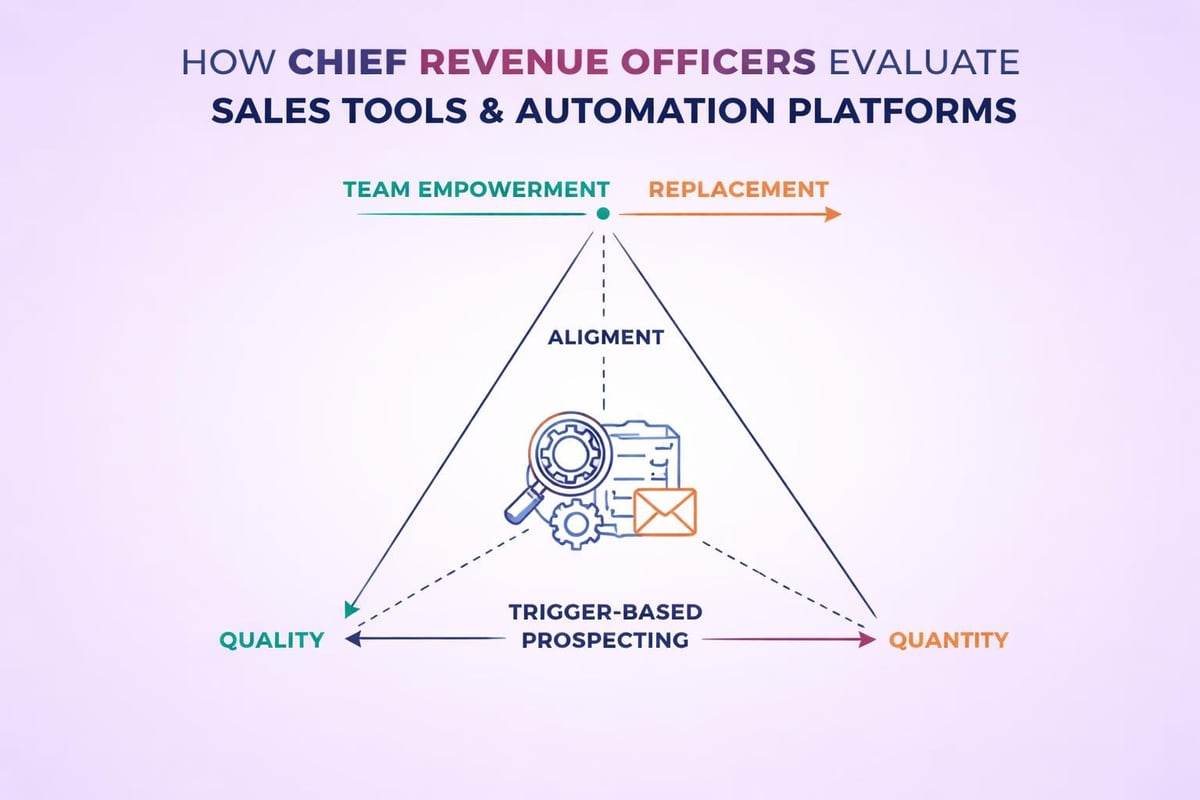
CROs particularly value solutions that enhance sales effectiveness without replacing human judgment. They seek tools that empower their teams, provide actionable insights, and improve conversion rates at each funnel stage. This perspective aligns perfectly with executive outbound strategies that prioritize quality over quantity.
Executive Decision-Making Patterns
Company executives approach purchasing decisions differently than mid-level managers or individual contributors. Understanding these patterns dramatically improves outreach effectiveness and conversion rates.
Trigger-Based Decision Windows
Executives rarely make significant purchasing decisions in isolation. Instead, they respond to specific organizational triggers that create urgency and justify investment. Common triggers include:
- Fundraising announcements that provide capital for new initiatives
- Leadership changes bringing fresh perspectives and priorities
- Market expansion requiring new capabilities and infrastructure
- Competitive pressures demanding rapid response
- Regulatory changes creating compliance requirements
Smart B2B sales strategies leverage these triggers for timely outreach. When company executives announce Series B funding, they're actively planning how to deploy that capital. When they hire a new CRO, they're evaluating their sales infrastructure. Trigger-based prospecting capitalizes on these natural decision windows.
Consensus Building Requirements
Unlike individual purchases, executive-level decisions typically require consensus among multiple stakeholders. The CEO might champion a solution, but the CFO must approve the budget, the COO must confirm operational feasibility, and the CTO must validate technical requirements.
This reality demands multi-threaded sales approaches that engage multiple company executives simultaneously. Successful vendors provide tailored messaging for each stakeholder, addressing their specific concerns while maintaining a cohesive narrative about overall value.
Effective Executive Engagement Strategies
Reaching company executives requires fundamentally different approaches than typical B2B prospecting. These leaders receive hundreds of outreach attempts weekly, developing sophisticated filters that screen out irrelevant or generic messages.
Quality Over Quantity
The spray-and-pray approach fails spectacularly with executive audiences. High-volume, low-personalization campaigns generate immediate deletions or spam reports. Company executives value their time intensely, responding only to communications that demonstrate genuine relevance and insight.
Effective executive outreach strategies emphasize:
- Deep research into the individual and their organization
- Timely relevance connected to recent company activities
- Concise communication that respects their limited attention
- Clear value propositions tied to their specific challenges
- Credibility signals including mutual connections or relevant case studies
Proven strategies for increasing response rates demonstrate that personalization depth matters far more than message volume. A single highly relevant message outperforms dozens of generic templates.
Leveraging LinkedIn for Executive Access
LinkedIn has become the primary platform for B2B executive engagement, providing unprecedented access to decision-makers who previously hid behind gatekeepers. Company executives actively maintain LinkedIn profiles, sharing insights, engaging with content, and evaluating potential partnerships.
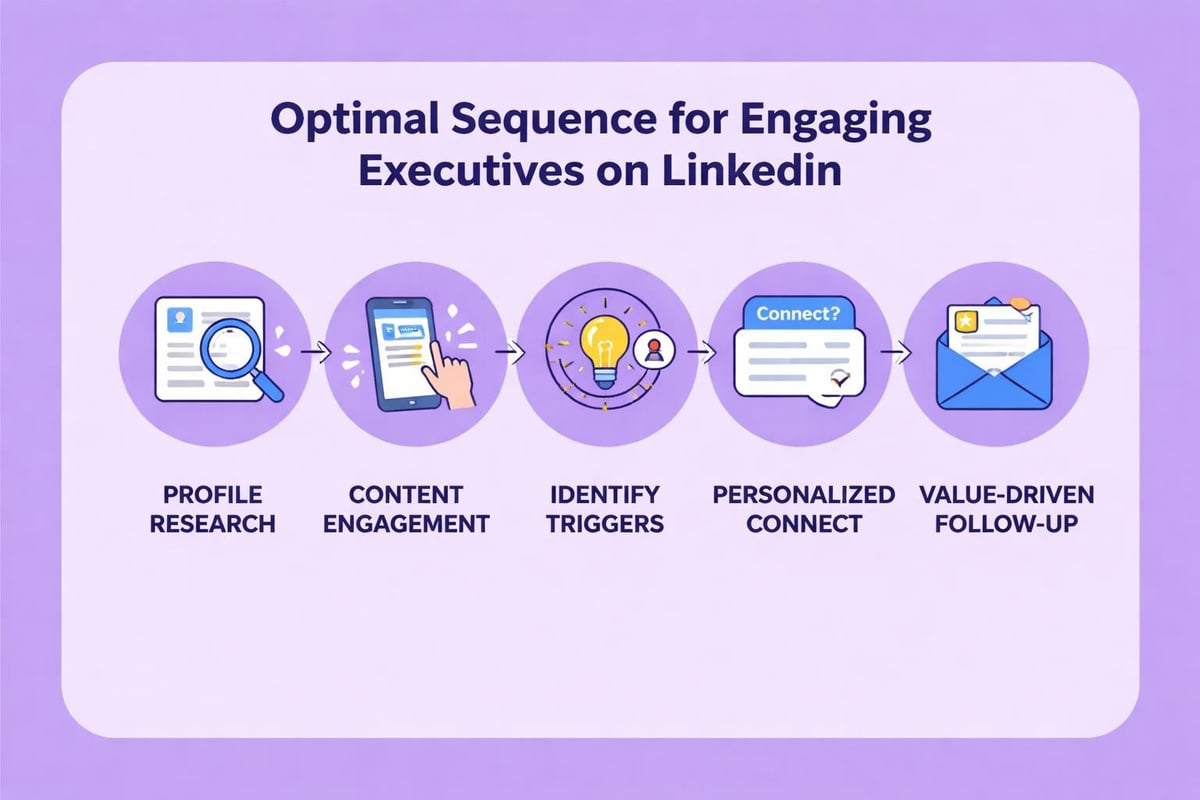
Successful LinkedIn strategies for executive outreach include:
- Profile optimization establishing credibility before connection requests
- Content engagement commenting thoughtfully on executive posts
- Mutual connection leverage requesting warm introductions
- Timing optimization reaching out after relevant company announcements
- Value-first messaging offering insights before requesting meetings
The platform's professional context makes it ideal for executive communication, but effectiveness still depends on relevance and timing. Game-changing outbound sales strategies increasingly incorporate sophisticated LinkedIn automation that maintains human oversight while scaling personalized outreach.
The Human Element in Executive Sales
Despite rapid AI advancement, company executives consistently prefer human interaction for significant business decisions. They want to engage with knowledgeable professionals who understand their challenges, not automated systems that mimic conversation.
Empowering Sales Teams
The most effective approach to executive sales combines automation's efficiency with human judgment and relationship-building. AI handles research, trigger identification, and initial outreach timing, while sales professionals craft personalized messages, conduct discovery conversations, and build genuine relationships.
This hybrid model respects what company executives value most: authentic expertise, strategic thinking, and partnership potential. Automated systems can't replicate the nuanced understanding that comes from genuine business experience and industry knowledge.
| Automation Strengths | Human Strengths |
|---|---|
| Trigger monitoring across thousands of prospects | Understanding context and implications of triggers |
| Scheduling and timing optimization | Building rapport and trust |
| Data enrichment and research compilation | Strategic conversation and needs discovery |
| Follow-up consistency | Adapting approach based on verbal and non-verbal cues |
| Performance tracking and analytics | Relationship nurturing and long-term partnership building |
Building Trust Through Expertise
Company executives engage with sales professionals who demonstrate deep industry knowledge and strategic thinking. They're seeking partners who can challenge their assumptions, provide market insights, and contribute to their strategic planning processes.
Thought leadership content plays a crucial role in establishing this credibility. When executives see you consistently publishing valuable insights, speaking at industry events, or contributing to meaningful discussions, they perceive you differently than typical vendors.
Effective thought leadership approaches include:
- Publishing original research relevant to executive challenges
- Sharing case studies demonstrating measurable outcomes
- Providing frameworks that executives can apply immediately
- Offering perspective on industry trends and implications
- Contributing genuinely helpful content without constant sales pitches
This long-term credibility building pays dividends when company executives face challenges your solution addresses. They remember the valuable insights you've shared and view you as a trusted advisor rather than a persistent vendor.
Navigating Executive Organizational Dynamics
Understanding distinct roles and responsibilities of different company executives helps sellers navigate complex organizational dynamics and identify true decision-makers.
Power Structures and Influence
Formal titles don't always reflect actual decision-making authority. Company executives wield varying levels of influence based on their tenure, track record, relationships with the CEO, and organizational priorities.
A newly hired CRO might theoretically own sales technology decisions, but the incumbent VP of Sales who's led the team for eight years might hold more practical influence. Understanding these dynamics requires research beyond LinkedIn titles, including conversations with multiple stakeholders and attention to organizational communication patterns.
Smart sellers map influence networks by:
- Identifying who speaks at company events and podcasts
- Noting who gets quoted in press releases
- Observing interaction patterns in LinkedIn posts
- Asking discovery questions about decision-making processes
- Monitoring organizational announcements for leadership changes
Executive Priorities in 2026
The challenges facing company executives continue evolving. Current executive trends emphasize digital transformation, remote workforce optimization, and sustainable growth strategies that balance efficiency with innovation.
Executives particularly focus on:
- AI integration that enhances rather than replaces human capabilities
- Data-driven decision making supported by robust analytics
- Customer experience optimization across all touchpoints
- Operational resilience enabling rapid adaptation to market changes
- Talent acquisition and retention in competitive labor markets
B2B solutions that address these priorities earn executive attention. When positioning your offering, connect features directly to these strategic imperatives rather than dwelling on technical specifications that matter more to implementers than decision-makers.
Measuring Executive Engagement Success
Company executives evaluate vendors based on outcomes, not activities. They care about results, not process metrics. This perspective should shape how you measure and report on executive engagement campaigns.
Meaningful Metrics for Executive Outreach
Traditional sales metrics like emails sent or connection requests made mean nothing to company executives. They want to see:
- Quality of conversations generated
- Decision-maker engagement rates specifically at C-level
- Pipeline velocity from executive introductions
- Deal sizes influenced by executive involvement
- Conversion rates comparing executive-originated vs. other opportunities
These metrics align with executive thinking patterns. They demonstrate strategic value and business impact rather than operational activity levels.
Continuous Improvement Through Feedback
Executive feedback provides invaluable insights for refining outreach strategies. When company executives engage with your outreach, whether positively or negatively, their responses reveal what resonates and what falls flat.
Pay attention to:
- Which trigger types generate the strongest response
- What messaging frameworks create genuine engagement
- How timing affects receptiveness
- Which value propositions spark interest
- What objections arise most frequently
This feedback loop enables continuous refinement, improving both efficiency and effectiveness over time. The goal isn't perfect outreach from day one, but rather systematic improvement based on real-world executive responses.
Company executives represent both the greatest challenge and opportunity in B2B sales. Their decisions carry significant weight, their buying cycles involve multiple stakeholders, and their standards for engagement remain exceptionally high. Yet when you reach them with timely, relevant value propositions that align with their strategic priorities, they become powerful champions who can accelerate deals and expand relationships far beyond initial scopes. Samplead empowers your sales team to engage company executives effectively through trigger-based prospecting that identifies the perfect moments for outreach, whether that's a fundraising announcement, podcast appearance, or key hiring decision. By keeping humans in the loop while automating research and timing, we help you deliver quality conversations that executives actually value.