Take Advantage of Strategic Timing in B2B Sales

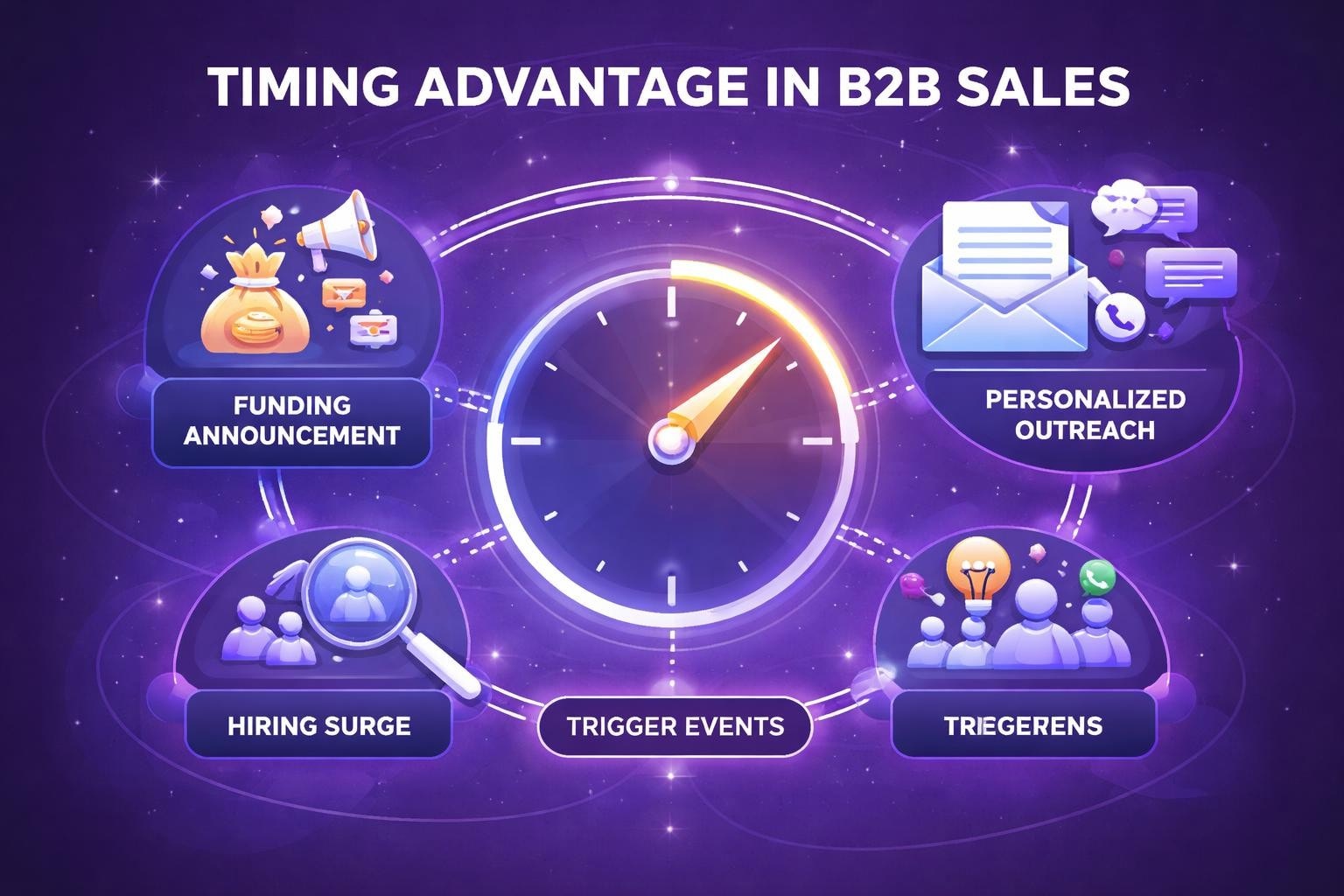
The phrase "take advantage" carries dual meanings in business contexts. Understanding when and how to take advantage of opportunities separates high-performing sales teams from those stuck in outdated spray-and-pray methods. In today's B2B landscape, especially for high average contract value (ACV) deals, the ability to identify and capitalize on precisely timed moments determines success. Smart sales organizations recognize that taking advantage of strategic triggers-fundraising announcements, leadership changes, technology implementations-creates meaningful conversations rather than intrusive cold outreach. This approach respects prospects' time while positioning your solution exactly when it matters most.
Understanding Strategic Advantage in Modern B2B Sales
The sales landscape has fundamentally shifted. Buyers no longer tolerate generic outreach that treats them as numbers in a database. Instead, they respond to relevance and timing.
Strategic advantage emerges from three critical elements:
- Identifying the right moment when prospects face specific challenges
- Delivering personalized value aligned with their current situation
- Maintaining human judgment throughout the engagement process
Traditional outbound methods fail because they ignore context. Sending 500 generic messages hoping for 2% engagement wastes resources and damages brand reputation. The modern approach focuses on quality signals that indicate genuine buying readiness.
The Trigger-Based Prospecting Revolution
Trigger-based outbound strategies represent the evolution of intelligent selling. Rather than interrupting prospects at random moments, this methodology waits for meaningful events that create natural opportunities for conversation.
Consider a SaaS company that just announced Series B funding. This trigger signals several realities: expanded budgets, likely technology stack evaluations, new hiring initiatives, and pressure to scale operations quickly. Sales teams can take advantage of this moment to offer solutions aligned with growth challenges rather than cold-calling during business-as-usual periods.
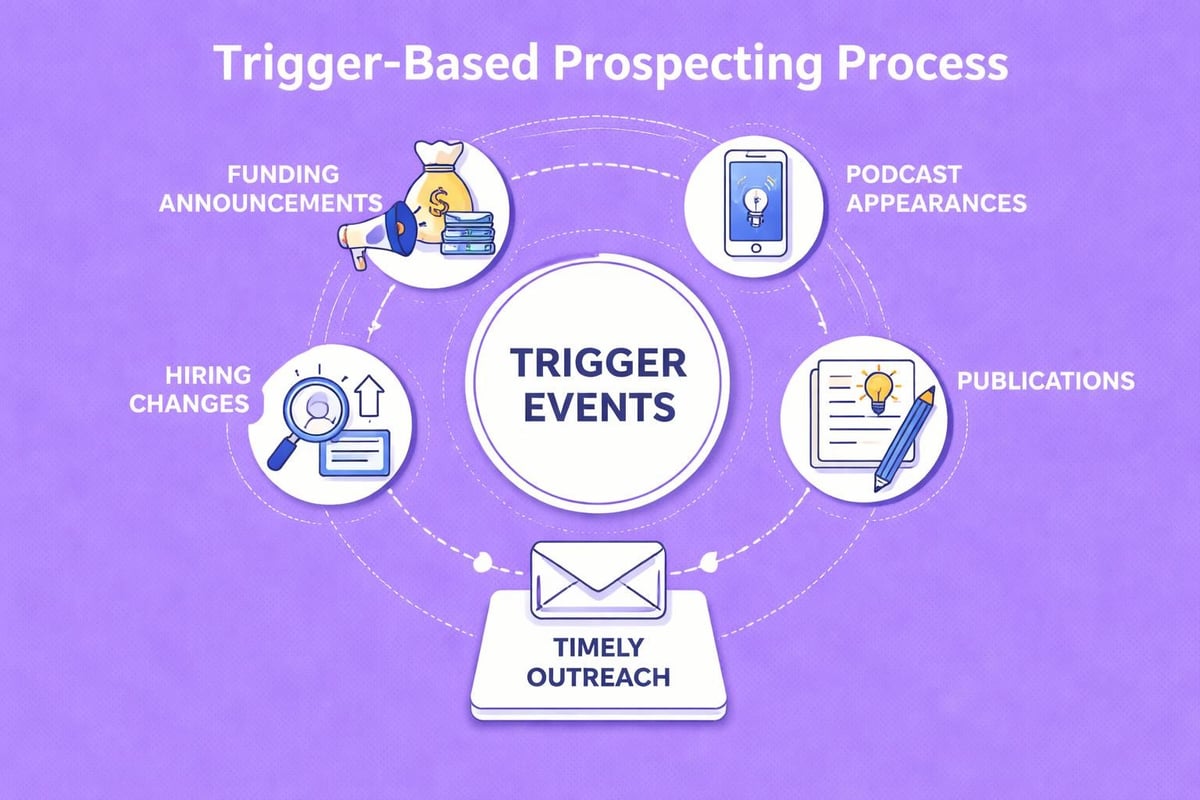
Common triggers that create strategic opportunities include:
- Funding announcements - New capital creates immediate technology and service needs
- Executive changes - New leaders bring fresh perspectives and willingness to reevaluate vendors
- Public content - Podcast appearances or published articles reveal current priorities
- Hiring surges - Rapid team expansion indicates scaling challenges
- Technology implementations - Adjacent tool adoptions suggest complementary needs
The key distinction separates reactive spam from proactive value delivery. When you take advantage of behavioral triggers correctly, prospects view your outreach as helpful rather than intrusive.
Quality Over Quantity: The High-ACV Imperative
High average contract value sales require fundamentally different approaches than transactional deals. When single contracts represent six or seven figures, volume metrics become meaningless. One perfectly timed, deeply personalized conversation outperforms one hundred generic touches.
Why Volume-Based Strategies Fail for Enterprise Sales
| Volume Approach | Strategic Approach |
|---|---|
| 500+ daily touches | 10-20 deeply researched contacts |
| 2% response rate | 30-40% response rate |
| Generic messaging | Context-specific value propositions |
| AI-generated spam | Human-crafted relevance |
| Brand damage risk | Relationship foundation |
Organizations selling complex enterprise solutions cannot afford to take advantage of prospects through aggressive automation that removes human judgment. The AI SDR market floods LinkedIn with barely personalized nonsense, training buyers to ignore automated outreach entirely.
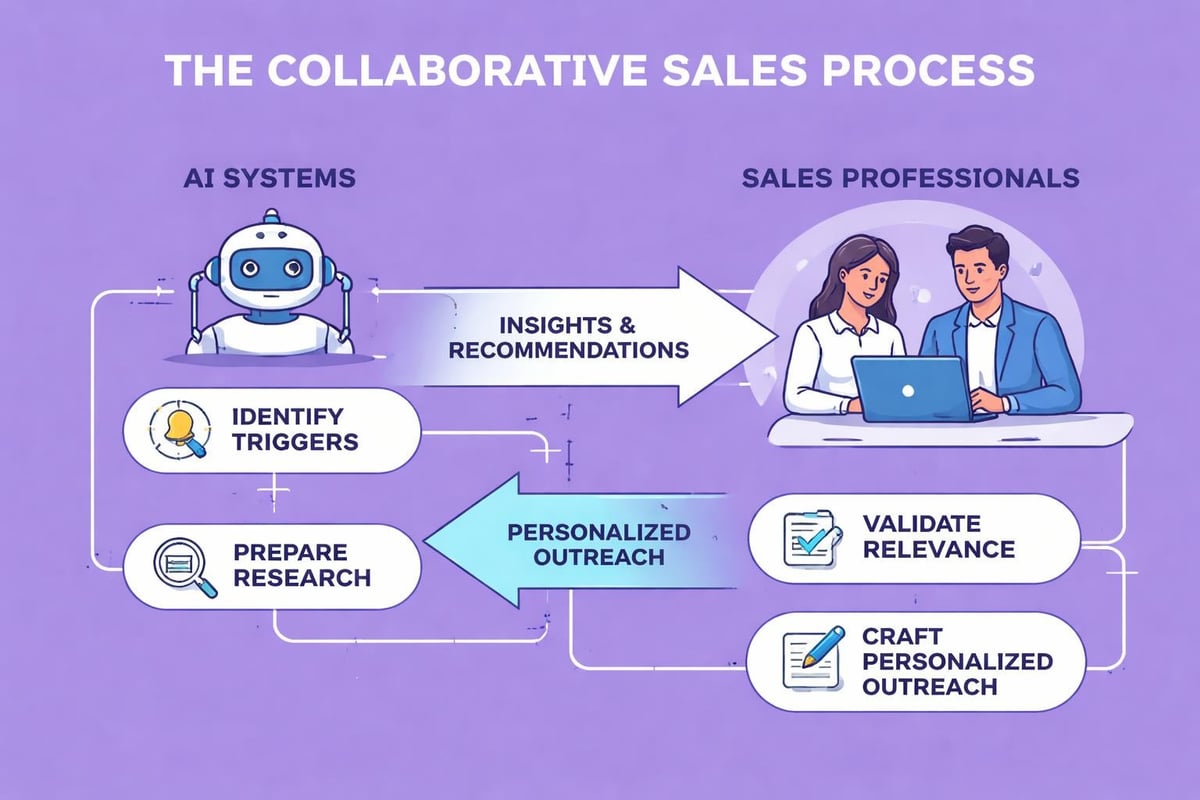
The alternative maintains technology's efficiency while preserving human insight. Automation should identify opportunities and prepare intelligence-humans should craft messages and manage relationships. This hybrid approach lets sales teams take advantage of scale without sacrificing quality.
Building Relationships Through Timely Relevance
Enterprise sales cycles span months or years. Initial outreach rarely converts immediately. Instead, the definition of advantage in this context means establishing credibility and staying present for the eventual buying window.
Strategic timing accomplishes multiple objectives simultaneously:
- Demonstrates genuine understanding of prospect challenges
- Positions your solution within relevant context
- Creates memorable first impressions that persist
- Builds permission for ongoing dialogue
When prospects encounter outreach aligned with their current reality, they grant attention. That attention becomes the foundation for relationships that eventually convert into revenue.
Implementing Trigger-Based Intelligence Systems
Moving from theory to execution requires systematic approaches that balance automation with human expertise. The goal involves creating infrastructure that identifies opportunities while empowering sales teams to capitalize on them effectively.
Building Your Trigger Monitoring Framework
Step 1: Define Your Trigger Categories
Start by mapping which events genuinely indicate buying readiness for your specific solution. Not all triggers carry equal weight. A hiring announcement for a sales operations role matters more for sales technology vendors than a marketing hire.
Step 2: Establish Monitoring Mechanisms
Technology should track relevant signals across multiple sources. LinkedIn activity, company news feeds, funding databases, podcast directories, and publication tracking all contribute pieces of the puzzle. Effective outbound sales strategies integrate these signals into unified dashboards.
Step 3: Create Response Protocols
When triggers fire, teams need clear playbooks. What research gets conducted? What messaging frameworks apply? Who owns the outreach? Response speed matters-the advantage diminishes as time passes between trigger and contact.
Step 4: Maintain Human Judgment Gates
Automation identifies and alerts. Humans validate and execute. Before any outreach occurs, experienced sales professionals should verify relevance and craft personalized approaches. This gate prevents the automated spam that plagues LinkedIn.
Crafting Trigger-Aligned Messaging
Generic templates defeat the entire purpose of trigger-based prospecting. The message itself must reflect the specific trigger that created the opportunity.
Funding Announcement Template Structure:
- Acknowledge the specific funding round and amount
- Reference likely challenges associated with scaling
- Offer relevant expertise or case studies from similar growth stages
- Suggest low-pressure conversation to share insights
Podcast Appearance Template Structure:
- Mention specific points from the actual episode
- Connect their stated priorities to your solution capabilities
- Demonstrate you invested time understanding their perspective
- Propose continuing the conversation they started publicly
The difference between good and great trigger-based outreach lies in specificity. Anyone can reference that funding occurred. Elite salespeople take advantage of the details-the investors involved, the stated use of funds, the strategic direction implied-to demonstrate genuine engagement.
Empowering Sales Teams Rather Than Replacing Them
The AI SDR market promotes complete automation as progress. This misunderstands enterprise sales fundamentals. Complex deals require human skills-reading subtle signals, adapting messaging dynamically, building authentic relationships, navigating organizational politics.
The Human-in-the-Loop Advantage
Technology excels at pattern recognition and data processing. Humans excel at judgment, empathy, and creative problem-solving. Combining these strengths creates outcomes neither achieves independently.
Consider the skills required for high-ACV sales success:
| AI Capabilities | Human Capabilities |
|---|---|
| Monitor thousands of data sources | Interpret stakeholder motivations |
| Identify pattern matches | Navigate political dynamics |
| Generate message variations | Build authentic trust |
| Schedule at optimal times | Adapt to unexpected objections |
| Track engagement metrics | Recognize buying committee shifts |
Smart organizations take advantage of AI for tasks that waste human time-data gathering, trigger monitoring, initial research compilation, meeting scheduling. This frees sales professionals to focus on activities that genuinely require human expertise.
Training Teams to Leverage Trigger Intelligence
Providing trigger data without training creates minimal value. Sales teams need frameworks for translating trigger intelligence into effective conversations.
Essential training components include:
- Trigger interpretation: What does this event actually mean for the prospect?
- Context research: Where should I look to understand the full situation?
- Message customization: How do I adapt frameworks for specific triggers?
- Timing optimization: When exactly should I reach out after trigger identification?
- Follow-up strategies: How do I nurture relationships that don't immediately convert?
Organizations that invest in these capabilities enable their teams to consistently take advantage of opportunities that competitors miss entirely. The technology identifies possibilities; trained humans convert them into revenue.
Measuring Success Beyond Vanity Metrics
Volume-based approaches celebrate meaningless statistics-messages sent, connection requests issued, sequences completed. These vanity metrics optimize for activity rather than outcomes.
Metrics That Matter for Strategic Outbound
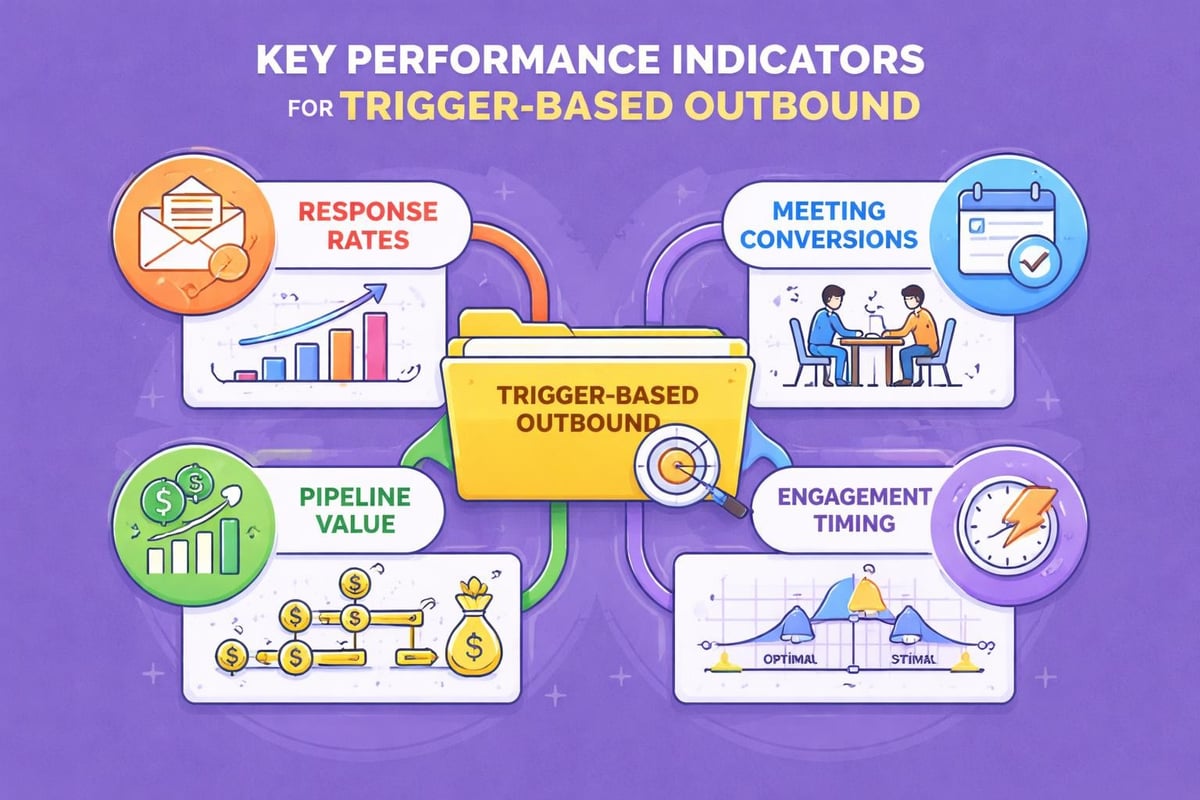
Response Rate: What percentage of outreach generates meaningful replies? For trigger-based approaches targeting enterprise prospects, rates between 30-40% indicate effective execution. Anything below 15% suggests insufficient personalization or poor trigger selection.
Meeting Conversion: How many responses convert to actual conversations? Not every reply represents genuine interest. Quality outreach should convert 60-70% of positive responses into scheduled meetings.
Pipeline Value: What total contract value enters your pipeline from trigger-based outreach? This metric directly connects prospecting activity to revenue potential. High-ticket sales strategies require tracking deal size, not just deal count.
Time to Engagement: How quickly does your team respond after trigger identification? Competitive advantage often comes from being first. Hours matter more than days.
Long-term Relationship Value: How many prospects engaged through trigger-based outreach eventually convert, even if not immediately? Enterprise sales cycles extend beyond quarterly metrics. Track cohorts over 12-18 months to understand true impact.
| Traditional Metrics | Strategic Metrics |
|---|---|
| Messages sent | Response rate percentage |
| Connections requested | Meeting conversion rate |
| Sequences completed | Pipeline dollar value |
| Activities logged | Time to initial engagement |
| Response count | 12-month conversion rate |
Organizations that take advantage of proper measurement frameworks make better decisions about resource allocation, messaging effectiveness, and trigger prioritization.
LinkedIn as the Primary Trigger-Based Channel
While trigger-based prospecting applies across channels, LinkedIn offers unique advantages for B2B enterprise sales. The platform combines professional context, behavior signals, and direct access to decision-makers.
Why LinkedIn Excels for Timely Outbound
Professional networks reveal triggers that email databases miss. When executives share content, change roles, or engage with specific topics, these signals indicate current priorities. LinkedIn marketing solutions provide visibility into prospect behavior that informs outreach timing.
The platform also permits research depth impossible through email alone. Understanding someone's career trajectory, content engagement patterns, and professional network creates foundation for genuinely personalized outreach.
Key LinkedIn trigger signals include:
- Profile updates indicating role changes
- Content posting revealing current focus areas
- Engagement with specific topics or companies
- Network expansion in particular domains
- Group participation showing interest areas
Sales teams can take advantage of these signals to time outreach when prospects actively think about relevant challenges. Someone posting about scaling difficulties provides better timing than random outreach during their quiet periods.
Avoiding LinkedIn Automation Pitfalls
The ease of LinkedIn automation has created massive problems. Connection spam, generic InMail templates, and bot-driven sequences have trained buyers to ignore most outreach entirely. Common mistakes that damage response rates often stem from over-automation without human oversight.
The solution maintains automation for monitoring and research while requiring human approval before any prospect contact. This gate ensures quality standards while preserving efficiency benefits.
Advanced Trigger Combination Strategies
Single triggers provide opportunities. Multiple simultaneous triggers create compelling urgency. Sophisticated teams take advantage of trigger combinations to identify prospects facing perfect storm moments.
Identifying Multi-Trigger Opportunities
Consider a prospect who simultaneously:
- Announced Series B funding two weeks ago
- Posted content about scaling challenges yesterday
- Just hired a VP of Revenue Operations
- Appeared on a podcast discussing go-to-market strategy
This combination suggests immediate needs for solutions supporting rapid growth. The funding provides budget. The content reveals active thinking. The hire indicates infrastructure investment. The podcast confirms strategic priorities.
Reaching this prospect with relevant value propositions during this window creates dramatically higher conversion probability than generic outreach during stable periods.
Building Trigger Scoring Systems
Not all triggers carry equal weight. Develop frameworks that assign values based on your specific solution and buyer journey.
Sample trigger scoring:
- Funding announcement: 10 points
- Relevant hire: 8 points
- Content about your solution category: 7 points
- Conference attendance: 5 points
- LinkedIn profile update: 3 points
Prospects crossing specific thresholds (perhaps 15+ points within 30 days) receive immediate attention. This systematic approach helps teams prioritize when opportunity volume exceeds capacity.
The Future of Strategic Outbound
Markets evolve constantly. The specific triggers that matter today may shift tomorrow. However, the fundamental principle remains constant: timing and relevance determine outbound effectiveness far more than volume and persistence.
Emerging Trigger Categories
Watch for new signal types as business communication patterns change:
Video content creation - Executives producing YouTube content or LinkedIn videos reveal priorities through topics addressed and questions answered.
Community participation - Engagement in Slack communities, Discord servers, or specialized forums indicates active problem-solving moments.
Technology stack changes - Tool adoption or retirement signals infrastructure shifts that create adjacent needs.
Regulatory responses - Companies addressing compliance requirements face specific, time-bound challenges.
Teams that take advantage of emerging trigger categories before competitors gain first-mover advantages in prospect conversations.
Balancing Automation and Authenticity
Technology will continue advancing. The temptation to automate everything will intensify. Resist the urge. The businesses that maintain human judgment in prospect interactions will differentiate themselves as automation floods channels with noise.
The winning formula combines:
- Technology for trigger identification and monitoring
- Automation for research aggregation and scheduling
- Human expertise for message crafting and relationship building
- Systems thinking for continuous improvement
Organizations implementing this balanced approach take advantage of efficiency without sacrificing the authenticity that enterprise buyers demand. Maximizing connection rates requires this human-technology partnership rather than pure automation.
Strategic sales success comes from recognizing and acting on opportunities when they emerge, not from blasting generic messages hoping something sticks. The ability to take advantage of trigger-based signals-while maintaining human judgment and authentic personalization-separates high-performing teams from those drowning in their own automated noise. Samplead helps high-ACV B2B businesses implement exactly this approach, combining automated trigger monitoring with human-in-the-loop execution to deliver timely, relevant outreach that empowers your sales team rather than replacing them.